
According to the FAO, each year rainfall releases slightly more than 505,000 km³ of water across our planet; of this, around 107,000 km³ falls on land. The lives of 8.3 billion people depend on this latter portion. Although population growth is slowing, there is consensus that we will reach 9.7 billion in 2050. However, practically the same amount of water will continue to fall, at a time when it will be necessary to increase agricultural production by 50% to 70%, depending on the region.
Pressure on food systems is increasing, and this pressure is transferred to the ecosystems that regulate the climate, recharge aquifers and maintain soil fertility. Agriculture and the environment will define our immediate future.
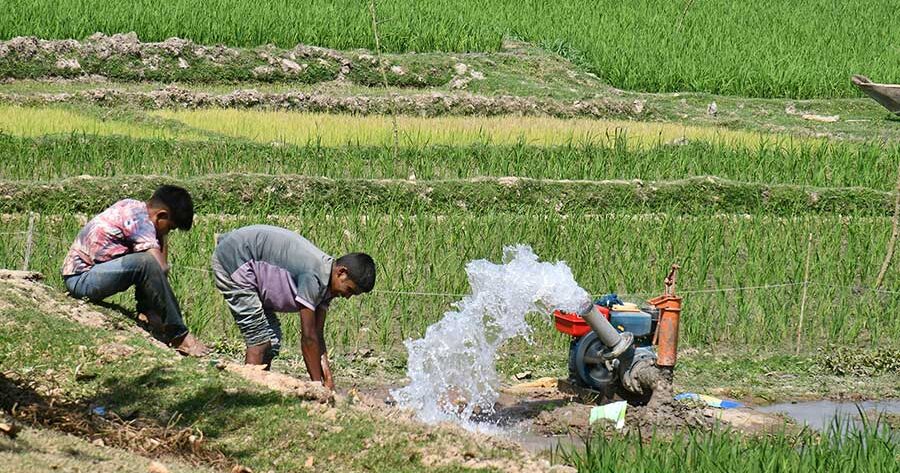
Irrigation transforms the landscape and can strengthen or weaken biodiversity depending on how it is managed. © pexels-masudar
More than 100,000 Farmers Who Do Not Waste a Drop
The challenge is clear: producing more food on less land, with less water and without exhausting the natural resources that sustain ecological cycles. This balance is already practised by the more than 100,000 farmers with whom we have worked to improve water management and understand its relationship with the soil, the environment and crops.
Project after project, we observe that small rural communities under water stress that acquire the capacity for water self-management use every resource responsibly and with exemplary efficiency. However, this local success needs to be scaled up to the district, the region and the country. Water sustainability requires policies and structures that multiply what already works at the community level.
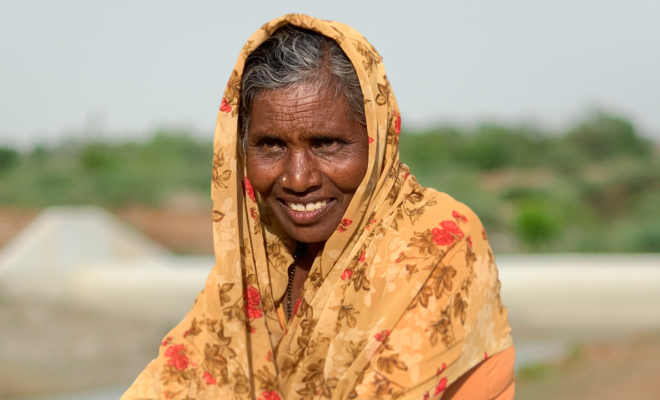
In India, in the gullies of Andhra Pradesh, in the hills of Pratapgarh, in the fields of Dewas, or in the villages of Tanzania, communities have succeeded in ensuring that water reaches where it is needed, while rehabilitating the environment. They have reduced their dependence on wet seasons, recovered degraded water bodies and restored exhausted soils. In Marungapuri, in the Indian state of Tamil Nadu, women have led the restoration of wells and the organisation of distribution networks that guarantee water for irrigation and consumption.
These farmers do not waste water because they know every well, every extraction pump and every section of the supply network they have designed together with their community. Direct contact with water problems allows them to regenerate water sources, protect aquifers and irrigate sustainably: when water is managed with local knowledge, shared responsibility and solid community structures, efficiency ceases to be a technical objective and becomes a way of securing the future.
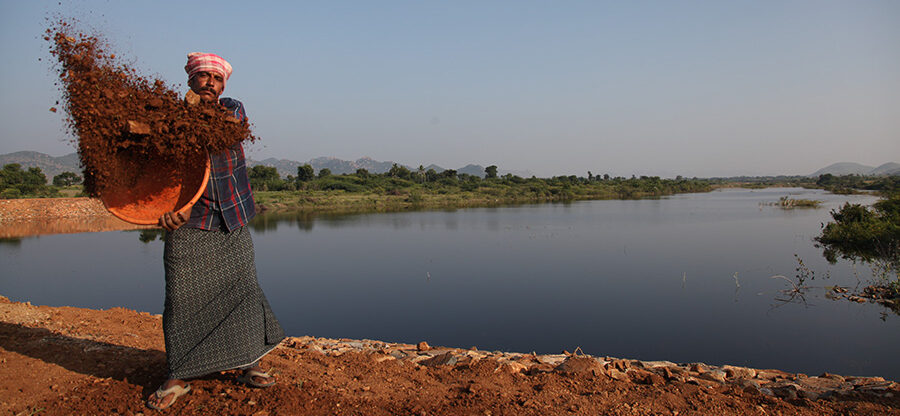
In India, in the gullies of Andhra Pradesh, in the hills of Pratapgarh, in the fields of Dewas, or in the villages of Tanzania, communities have succeeded in ensuring that water reaches where it is needed, while rehabilitating the environment. ©FVF
Irrigation for Global Balance
According to the FAO, irrigation doubles productivity compared with rainfed agriculture, enabling an additional 1.4 billion people to be fed, reducing prices and decreasing vulnerability to climate impacts. It is therefore an essential factor for food stability and for planetary balance.
The industrialised world has known this for more than 50 years. In 1974, Henry Kissinger opened the World Food Conference in Rome with a forceful message: hunger was not only a human tragedy, but a factor of global destabilisation. The then United States Secretary of State cited the conclusions of a CIA study — now declassified — which warned that droughts were increasing and could alter the international balance.
In the 1990s, ecological economists such as Herman Daly and Robert Costanza introduced a decisive concept: ecosystem services should be recognised as the irreplaceable foundation of all economic activity. Water regulation, soil fertility, pollination and biological control were recognised as the invisible pillars of agriculture.
At the same time, faced with the evidence that without functional ecosystems there is no sustainable agriculture, industrialised agriculture promised that technology would be enough to guarantee food security. The tension between these two visions would mark the following decades.
At the beginning of this century, the IPCC scientifically confirmed the climate alert and ecology explained the relationship between agricultural practices and ecosystem health. The expansion of irrigation became a logical response to climate variability, but it also opened a new front: the overexploitation of aquifers.
In many parts of emerging countries, the “efficiency paradox” has occurred: advances in technologies such as groundwater detection and more efficient irrigation systems, together with production incentives, have, in many cases, led to increased water consumption rather than reduced it. A clear example is the phenomenon detected in 2009 in the Ganges basin, where groundwater extraction for agricultural use had multiplied sevenfold since 1960.
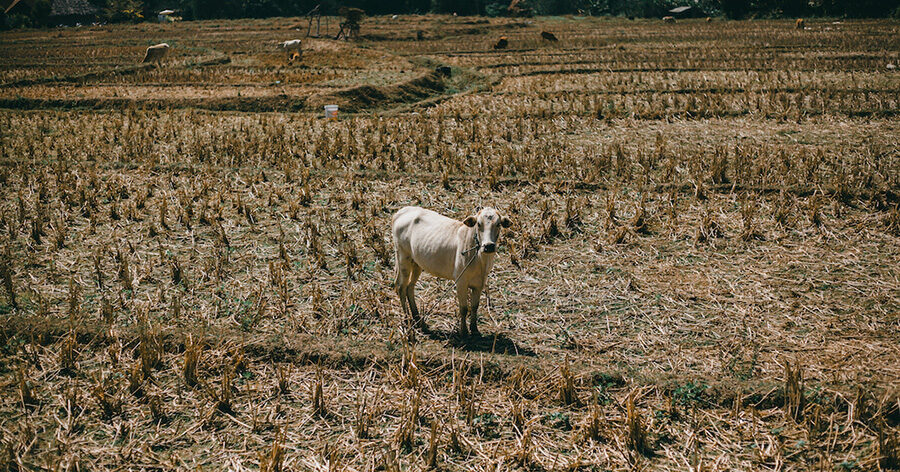
According to the FAO, irrigation doubles productivity compared with rainfed agriculture, enabling an additional 1.4 billion people to be fed, reducing prices and decreasing vulnerability to climate impacts. © street-thailand-nature/Freepick
Managing Water Stress
Since 2015, water stress has become one of the major threats of the 21st century. According to the Water Risk Atlas of the World Resources Institute (WRI), a quarter of the world’s population — around 2 billion people — currently lives in areas where water demand systematically exceeds supply.
Prolonged droughts and soil degradation push millions of people to leave rural areas. These migrations towards cities generate new pockets of poverty and reduce agricultural productivity in regions already suffering from food shortages. Sub-Saharan Africa, Central America and Southeast Asia are clear examples of this dynamic.
At the same time, the loss of pollinators, soil erosion and habitat fragmentation directly affect agricultural productivity. Biodiversity is not an ecological luxury, but an essential component of food security and resilience to climate change.

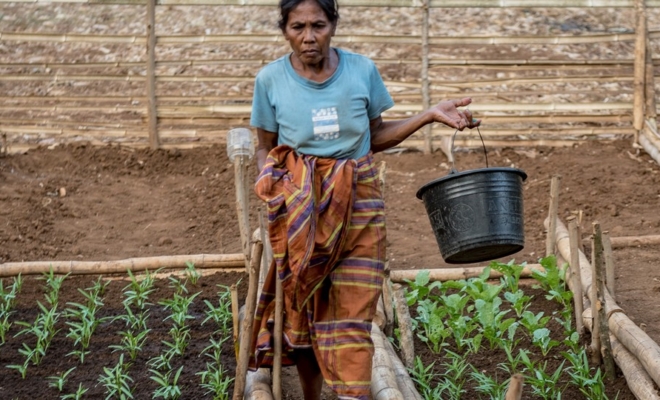
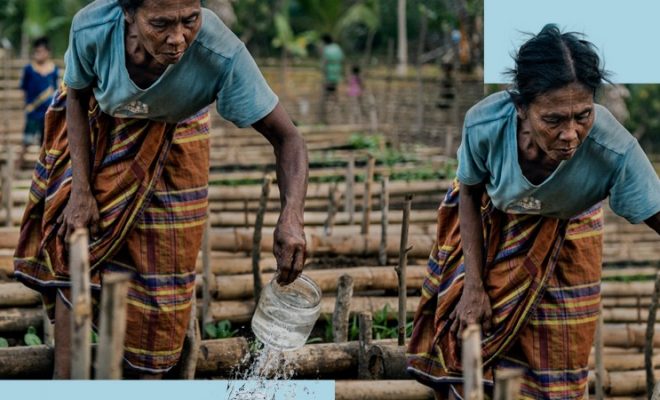
The development of drip irrigation systems, smart sprinklers, rainwater harvesting and community storage allows more to be produced with less water.
Solutions at Three Levels: Technology, Governance and Knowledge
Innovation offers decisive tools to reduce water consumption and increase agricultural resilience. The development of drip irrigation systems, smart sprinklers, rainwater harvesting and community storage allows more to be produced with less water.
However, these solutions only function fully when solid institutions and clear rules exist. It is essential to establish extraction limits based on the real recharge of aquifers, apply coherent and fair tariffs, and control pollution from fertilisers and pesticides that damage surrounding ecosystems.
The third level is knowledge. Experience shows that the participation of small farmers is key: they know the territory best and can transform it when they receive support. Training in regenerative agricultural practices, access to climate information and the installation of simple technologies —such as hub & spoke distribution systems or reverse osmosis units— make it possible to manage water without exhausting resources.
Food security depends on the health of ecosystems. Irrigation is indispensable for combating hunger and poverty, but it is only efficient if it respects the limits of water and biodiversity. Small communities — those that manage water with knowledge and shared responsibility — understand this well.
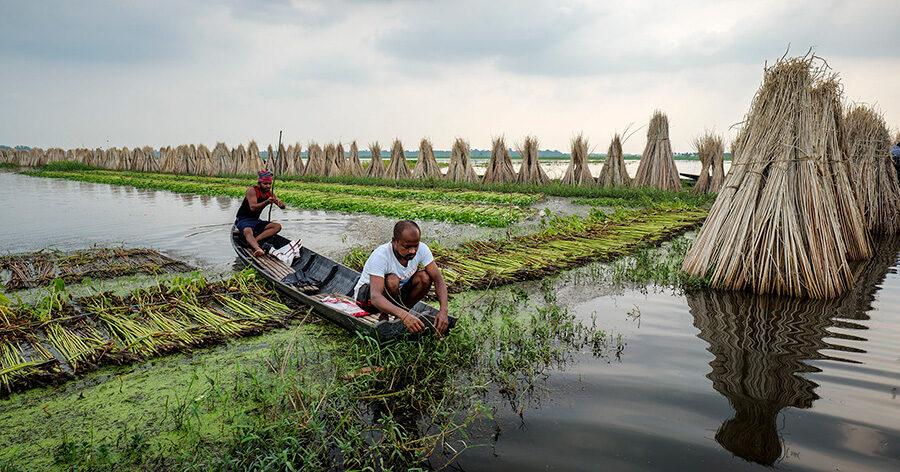
Food security depends on the health of ecosystems. © Dipayan Bose/WMO