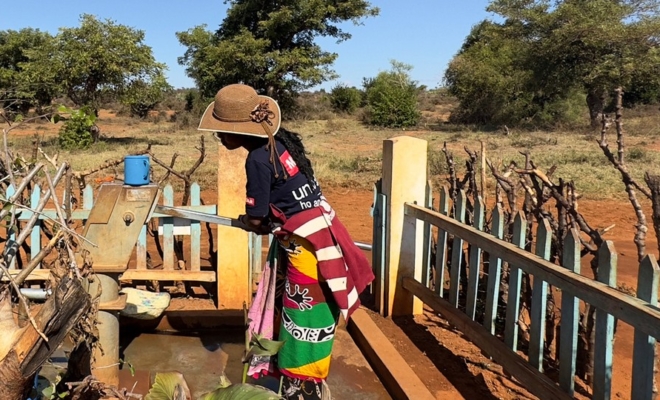

In a small village in the district of Dewas, in India, the arrival of water transformed more than daily life. Before, women walked for hours to collect murky water; children missed school; the community lived trapped in a cycle of precariousness. When the community took part in constructing the well and learned to understand and manage the water cycle, life changed completely. From that process emerged a value that stood out above all others: cooperation.
First among the villagers themselves. Then among the neighbouring villages that share the same basin. “We share the water, and if we take care of it, we will all be well. The water from the stream and the groundwater unite us,” concluded the water committees as they understood how the hydrological cycle works and how the communities that depend on it are interconnected. Water ceased to be a scarce resource and became a bond.
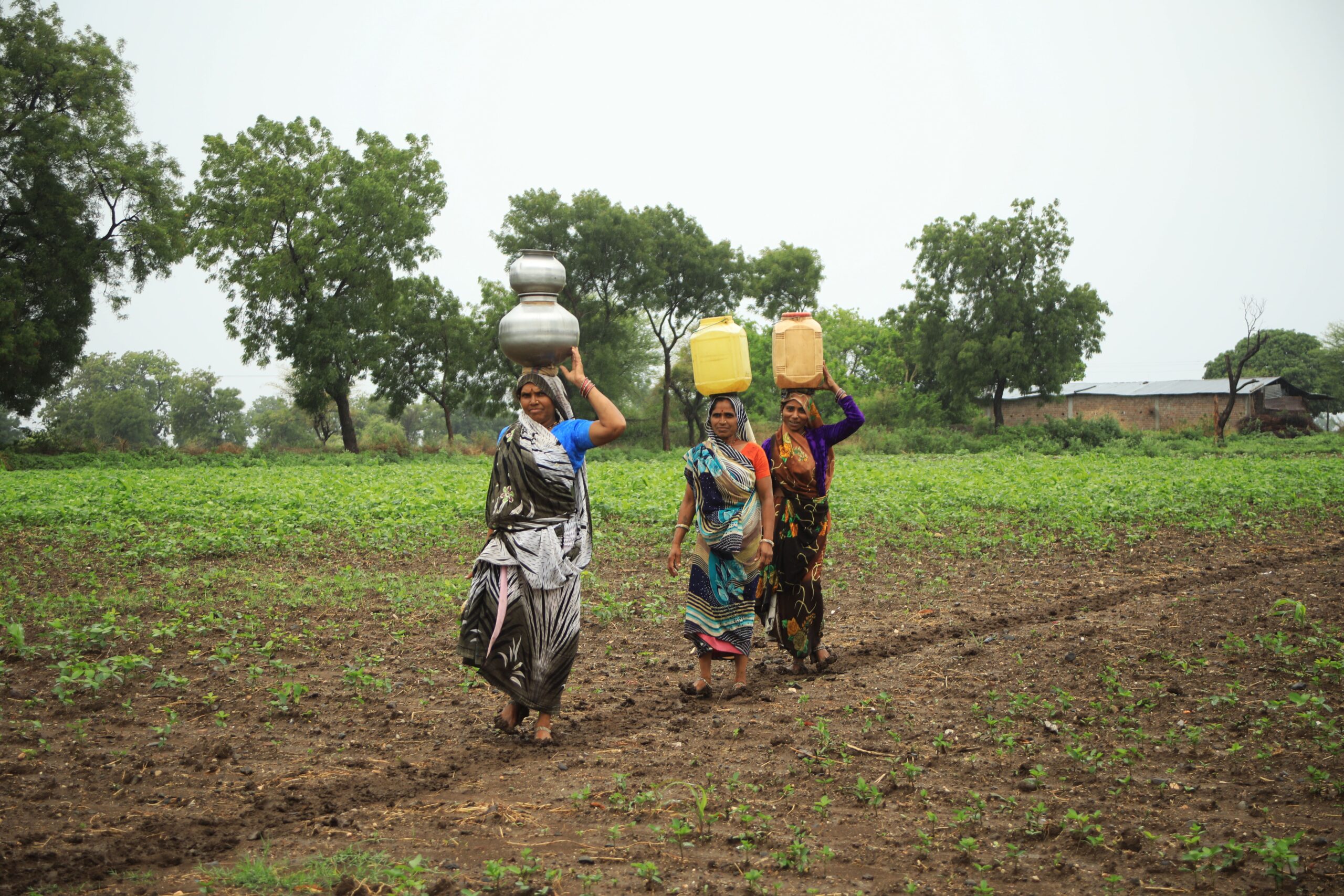
Cooperation is not an option; it is an indispensable pathway to securing a safe and sustainable future. © pexels-mike-sangma
At the Foundation, we know this message well; we have scaled it up and brought it into the sphere of international governance. In the challenge of access to water, it is already an unshakeable principle: only through cooperation will we achieve universal, safe access. In recent international debates — from Climate Change, Water and Peace at COP28, to the Water Pavilion at COP29, and the presentation of the documentary Amazonas: la memoria del agua at COP30 — we have observed a clear convergence with experts and institutional leaders: cooperation and access to water generate each other; they are cause and effect at the same time.
In Dubai, Baku, and Belém, we heard the same idea expressed from different angles. Alliances between governments, the private sector, academia and civil society not only accelerate technical solutions but also strengthen social resilience and reduce the risks of conflict: shared water creates stability, and stability enables water to be shared. It is a virtuous circle that we must protect and expand.
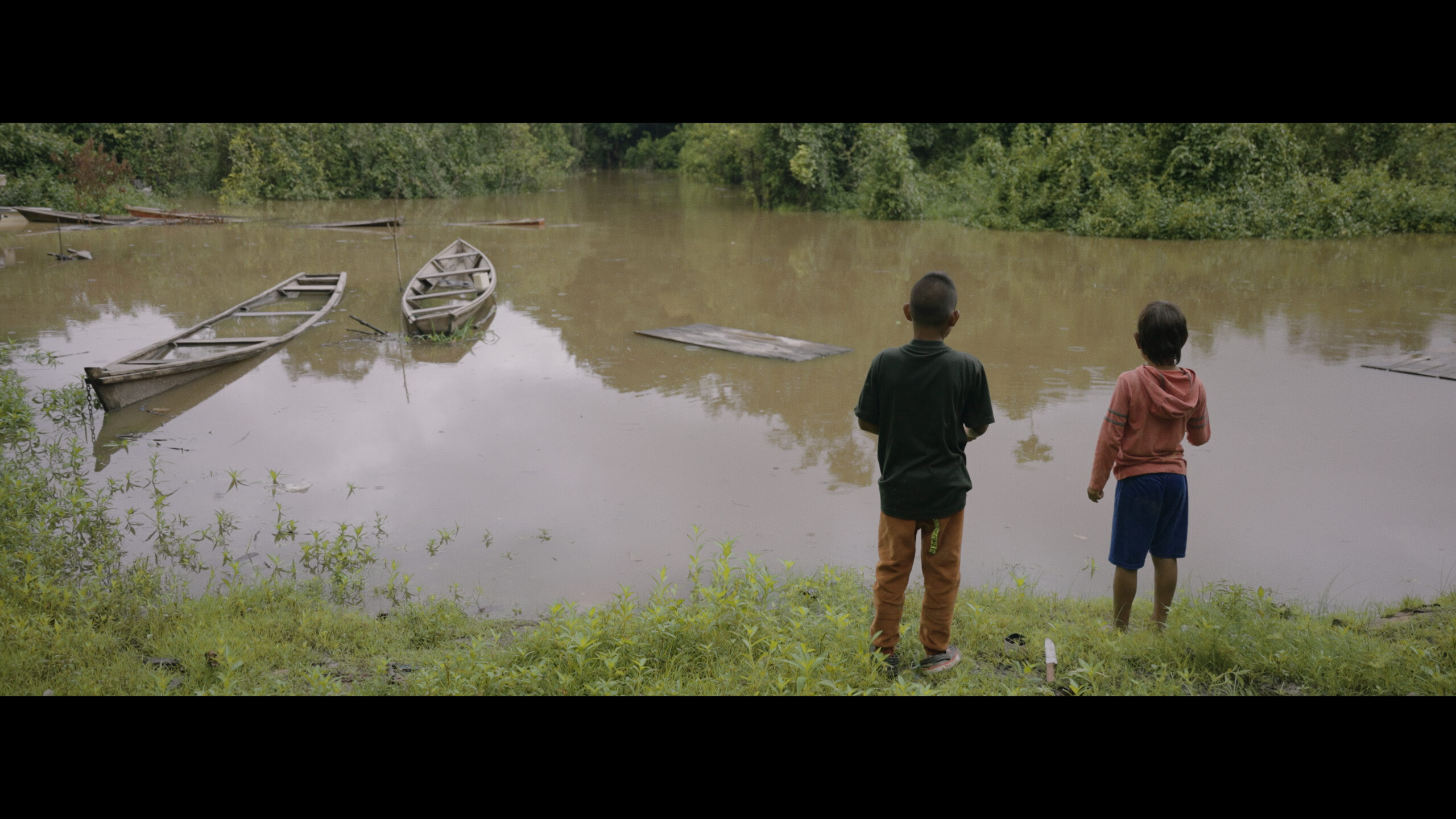
In recent international debates — from Climate Change, Water and Peace at COP28, to the Water Pavilion at COP29, and the presentation of the documentary Amazonas: la memoria del agua at COP30 — we have observed a clear convergence with experts and institutional leaders.
Dushanbe: Water as a Tool for Cooperation and Resilience
In Tajikistan, during the fourth edition of the High-Level International Conference on the Water Action Decade, we once again took part in an international meeting of great significance. The central debate — Climate Change, Water and Resilience: Perspectives from Governments, International Organisations and the Private Sector — focused on a message we have defended for years: resilience cannot be built in isolation.
Within the framework of the Dushanbe Water Process, in which the conference is situated, academics, international organisations and representatives of the private sector analysed how climate change intensifies pressure on water resources and how cooperation is urgent to guarantee stability and development. The panel brought together leading voices, including H.E. David Fernández Puyana, Ambassador of UPEACE and Permanent Delegate to UNESCO; H.E. Khrisrav Sohibzoda, Ambassador at Large of Tajikistan; Dr Carmen Parra Rodríguez, UNESCO Chair on Peace; and Daniel Hernández, Director of ROCA Group in Kazakhstan.
In this context, Carlos Garriga, Director of the Foundation, once again highlighted the evidence we observe in our projects and which shapes a model of water as a tool for peace. His message was clear: “Again and again, water becomes a reason to cooperate, to build trust and to create alliances around shared vulnerabilities and shared solutions.”
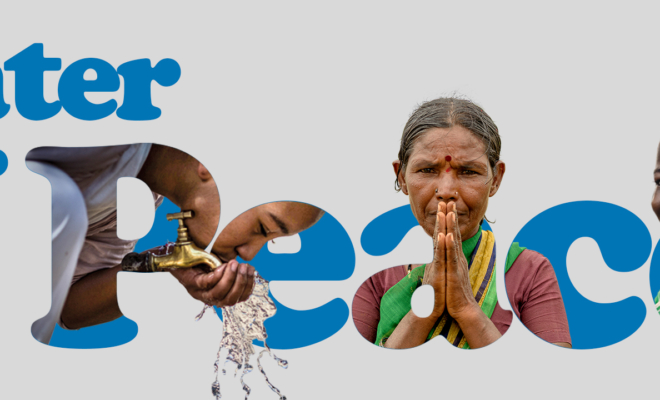
The idea shaped the entire session: water not only sustains life; it sustains cooperation. Wherever it is shared, stability, resilience and peace flourish.
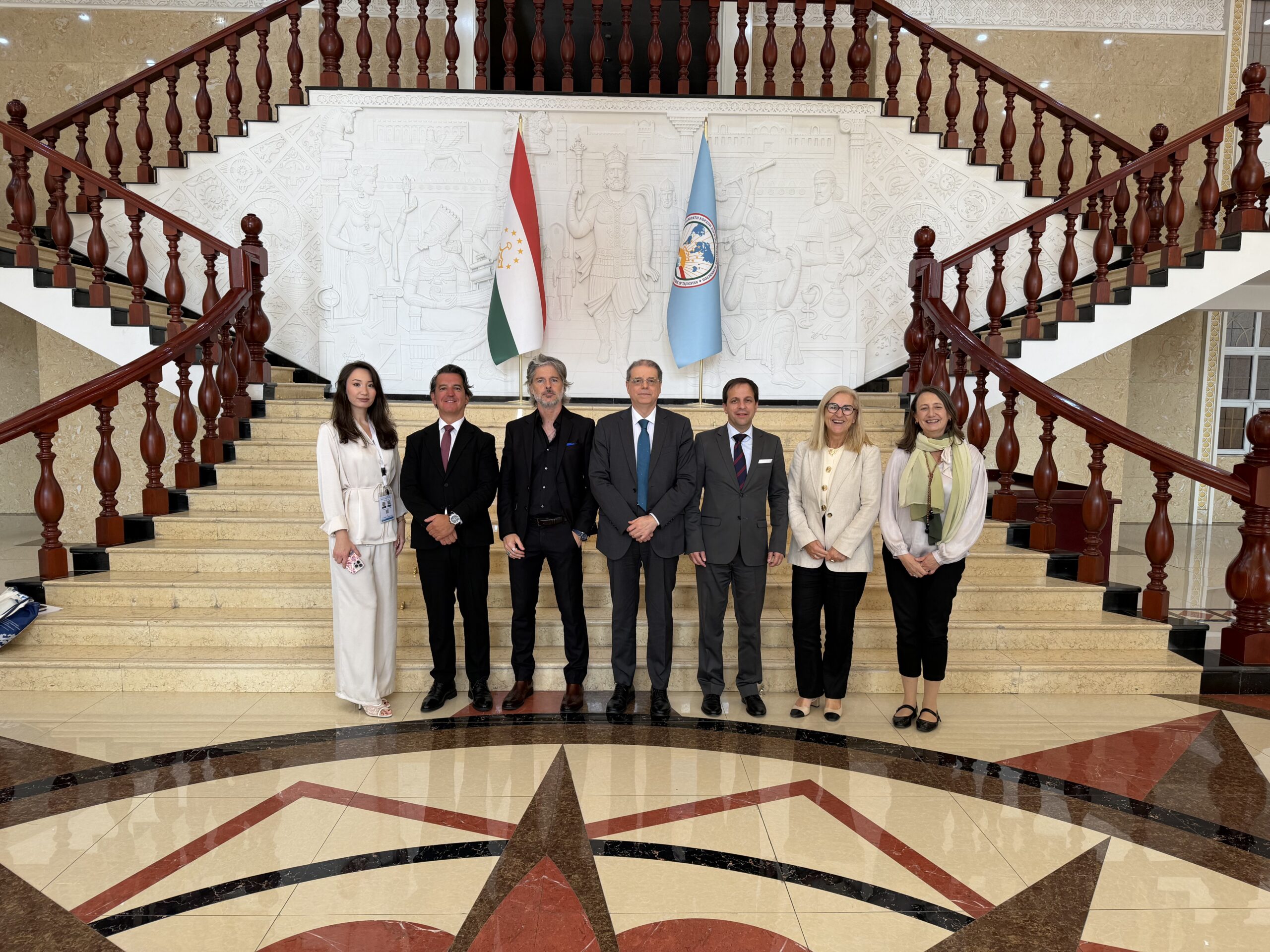
The panel brought together leading voices, including H.E. David Fernández Puyana, Ambassador of UPEACE and Permanent Delegate to UNESCO; H.E. Khrisrav Sohibzoda, Ambassador at Large of Tajikistan; Dr Carmen Parra Rodríguez, UNESCO Chair on Peace; and Daniel Hernández, Director of ROCA in Kazakhstan.
Tajikistan at the Climatic Crossroads of Central Asia
This was also the central message in the Foundation’s presentation to members of the Government of Tajikistan at the Ministry of Foreign Affairs. In his intervention, Garriga recalled that climate change is placing increasing pressure on water resources worldwide and that its impacts are not solely environmental: “They are social. Economic. Human. And increasingly, geopolitical.”
Because of its history and geographical position, Tajikistan plays a significant role:
“Here in Central Asia,” he noted, “water has shaped civilisations, agriculture, energy systems and regional relations for generations. Rivers do not stop at borders. They connect countries. But they also connect destinies.”
The Tajik Government is fully aware of this reality. For this reason, it promotes the Dushanbe Water Process, a strategic initiative aimed at strengthening international cooperation on water during the International Decade for Action Water for Sustainable Development (2018–2028). Within this framework, high-level conferences are held every two years, bringing together governments, United Nations bodies, the private sector, scientists and civil society.
It is an essential space for accelerating commitments, sharing solutions and reinforcing water governance at a critical moment: the accelerated retreat of glaciers, the growing pressure on rivers and the increase in climate risks threaten stability and are becoming evident across Central Asia.
Our experience confirms a truth that no one disputes any longer: water is a unifying force in a fragmented world. In Central Asia, where rivers connect destinies more than borders, this message takes on particular urgency: the collaboration of all sectors of society not only improves access to water but also transforms the way communities prepare for the future.
It is time to strengthen alliances and act with the ambition the planet requires.
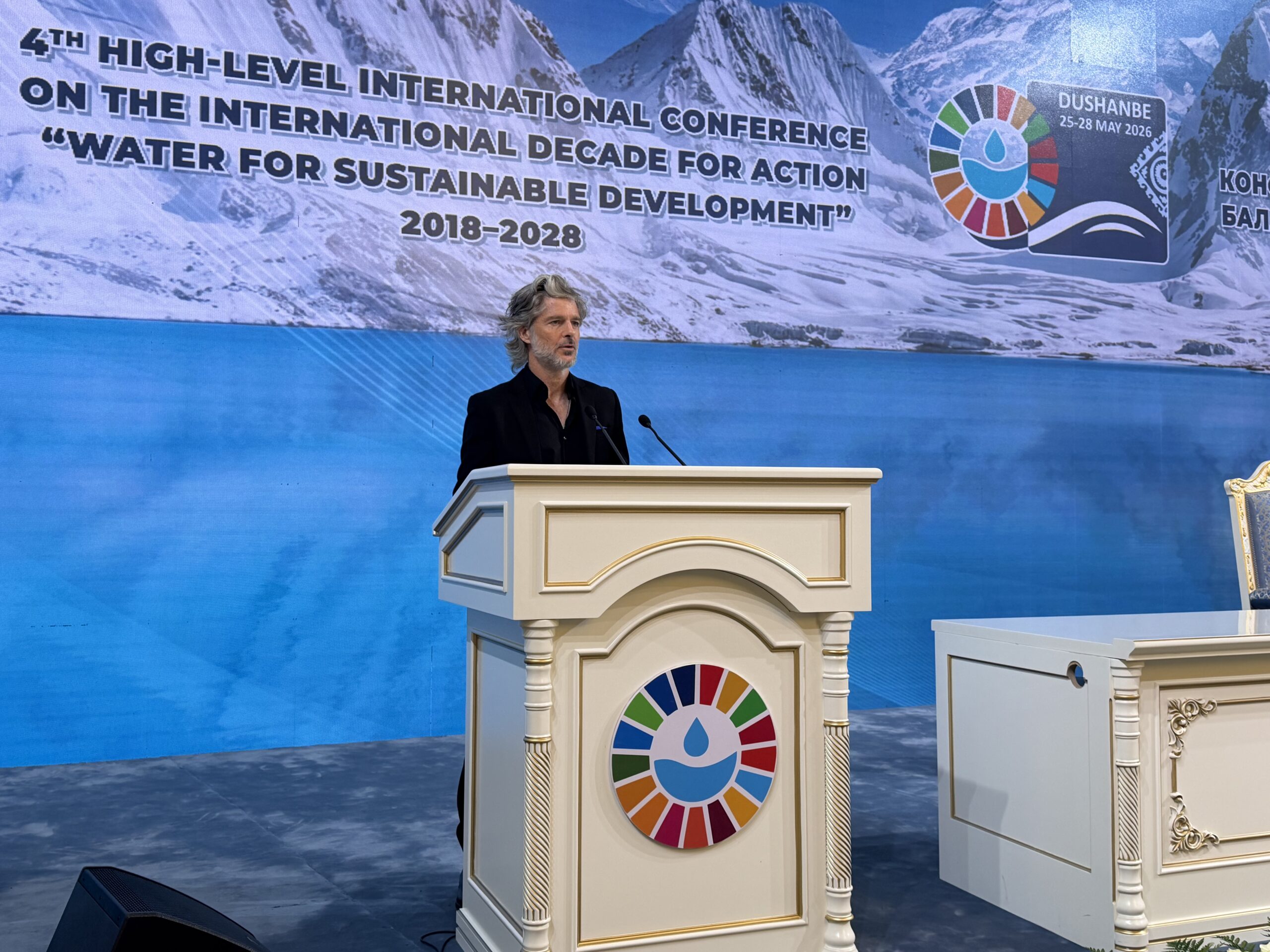
Carlos Garriga, Director of the Foundation, once again highlighted the evidence we observe in our projects and which shapes a model of water as a tool for peace. His message was clear: “Again and again, water becomes a reason to cooperate, to build trust and to create alliances around shared vulnerabilities and shared solutions.”