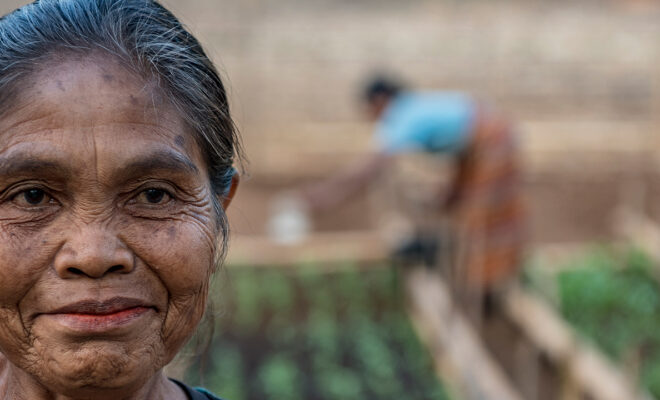
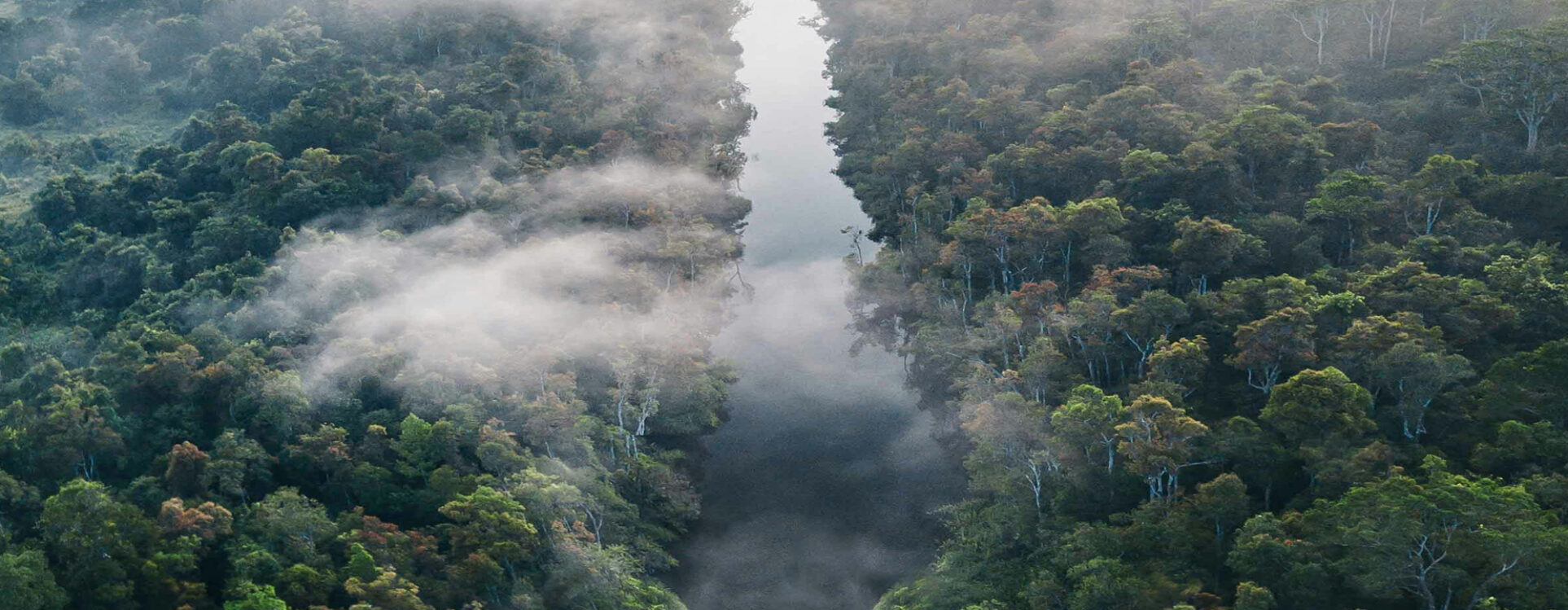
“Where we tread, plants are born. Where we tread, springs are born. Wherever our people leave, devastation grows […] The answer is us.” The voice of Karipuna leader Amõkanewy Kariú expressed it with clarity and force: they demand a just transition and uphold their way of life as a solution—living in harmony with a world overflowing with biodiversity, something difficult to grasp for societies marked by industrial agriculture and cultural uniformity. For them, diversity is strength, creativity and innovation… and we are destroying it.
At COP30, more than 900 indigenous representatives were accredited, compared with 300 at the previous edition. Alongside the Karipuna, Amazonian peoples such as the Ticuna, Mundurukú, Huni Kui, Kayapó and Tupinambá raised their voices, together with Caribbean representatives, Mayans from Guatemala and native communities from other regions of the world, such as the Mapuche of Chile and Aboriginal peoples of Australia. Their message was emphatic: “If there is still forest, it is because we protect it with our bodies.“
The indigenous presence in Belém is a source of hope. For the first time, they feel the world is paying attention to them and that they can open political spaces and secure concrete responses from governments, institutions, and companies. They must sit at the decision-making tables. Their knowledge is incalculable, and they must lead the struggle for the justice that is theirs: confronting illegal mining, clandestine logging, polluting discharges and institutional neglect.
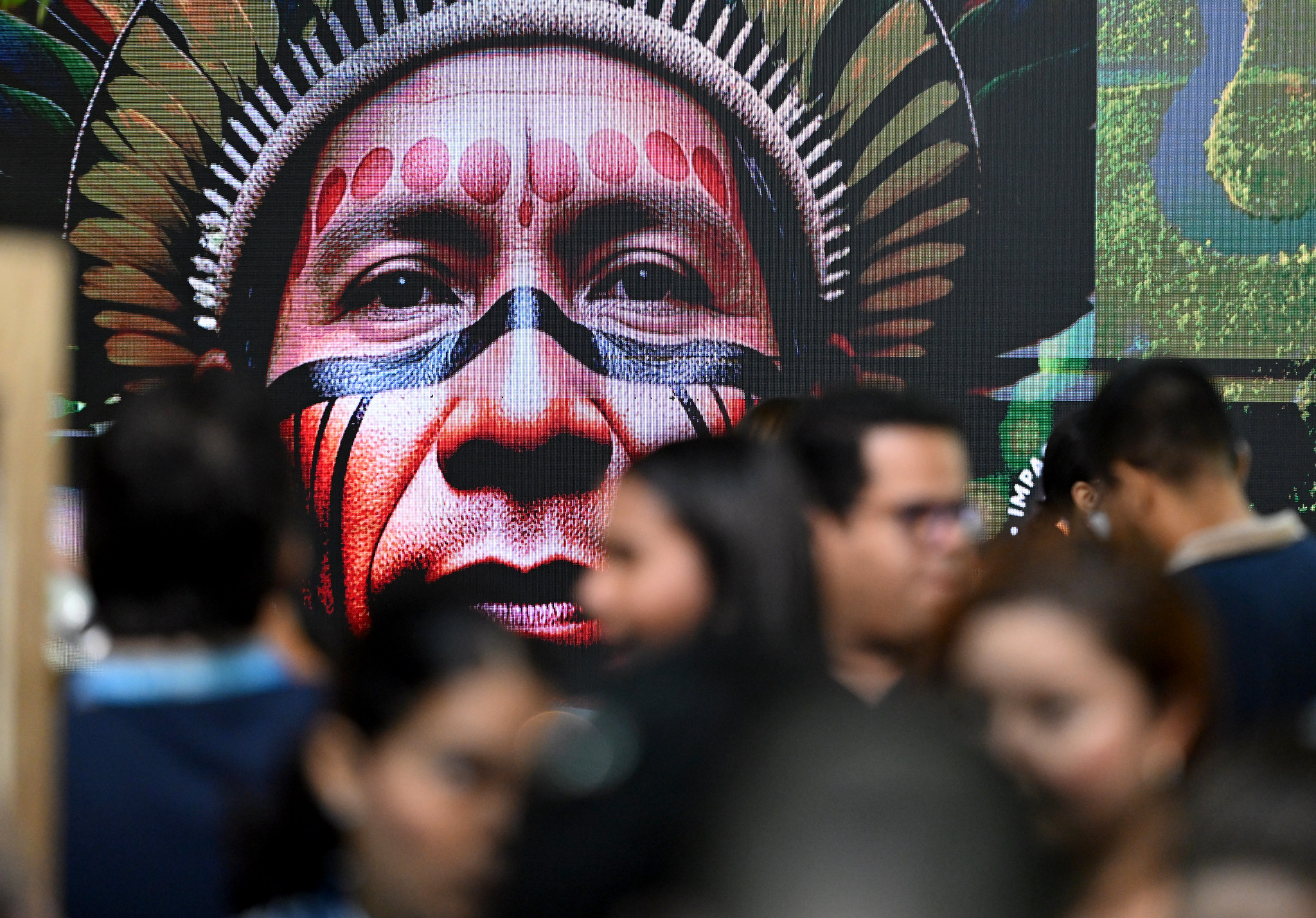
COP30 has changed the global climate narrative: the Amazonian peoples have become protagonists. . © Alex Ferro
The indigenous testimony of the water and forest of the Amazon
The Foundation’s participation in COP30 provided direct testimony of the consequences of climate change and human action on Amazonian communities. This testimony is captured in the documentary Amazonas. The Memory of Water, produced in collaboration with World Vision, which we will present shortly. The river is no longer the same, and life alongside it no longer resembles that of their grandparents.
Changes in the seasonality and intensity of rainfall bring dire consequences: water floods precarious homes during the “rises” and retreats further away during the “falls”. Few are now safe in their houses during the rainy season, and transport and fishing are more difficult in the dry season. But the change is not only in intensity but in uncertainty: the seasons blur, rainfall is more unpredictable, and organising daily life becomes increasingly complex.
Health is the first to deteriorate. The rises carry faecal waters, another sad consequence of neglect. The waters also drag industrial pollutants: there is a lack of drinking water for consumption, cooking and washing clothes, and fishing dwindles. The grandparents remember the time when they could live from it. They are “living libraries” that teach us how to care for water, flora and fauna, and how to live from them: how to hunt, fish and cultivate. Today, in many areas, there is almost no river left in which to apply that wisdom.
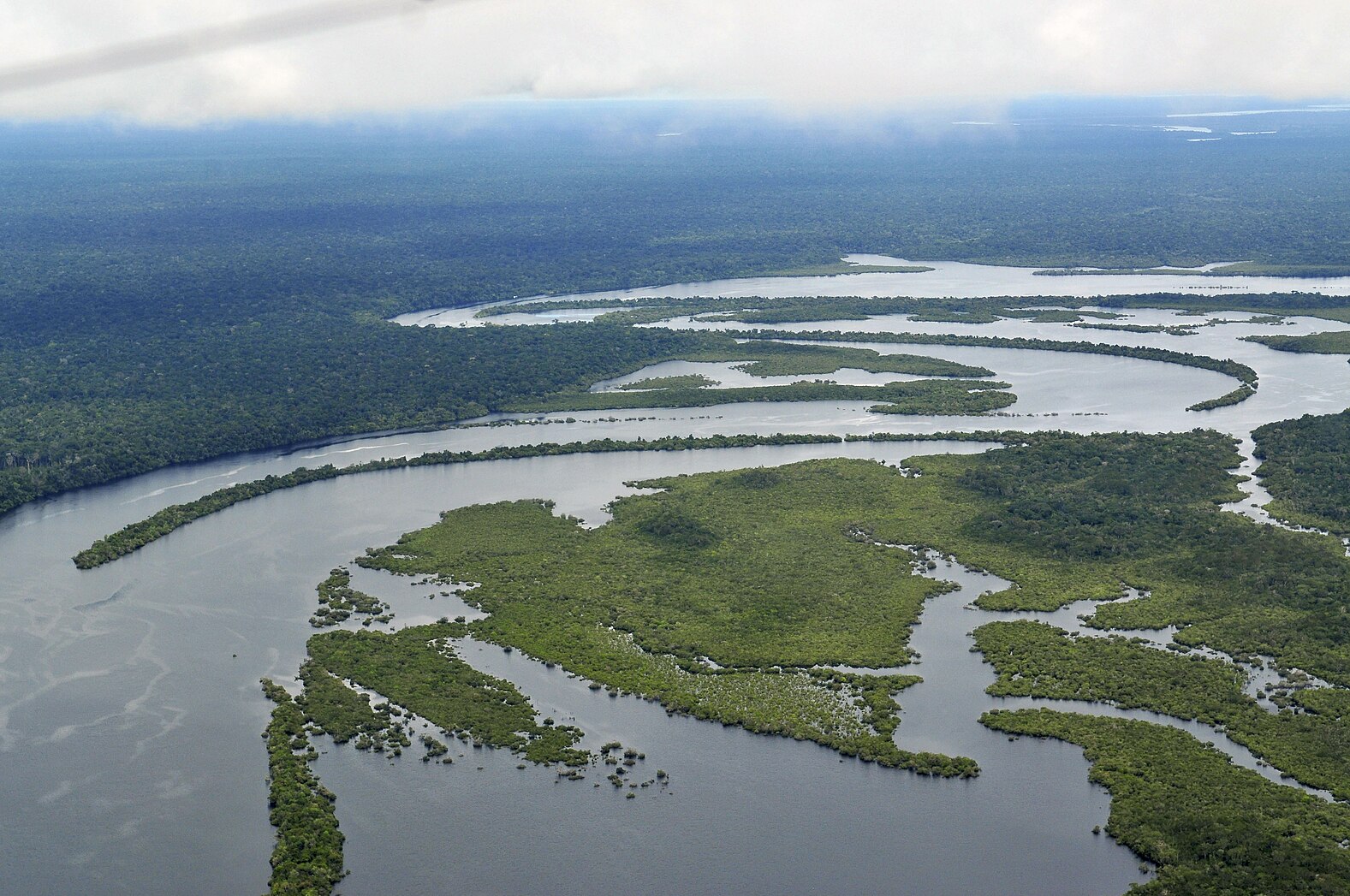
The Amazon is one of the regions of the world that has generated the most scientific, environmental, and political alerts in recent decades.
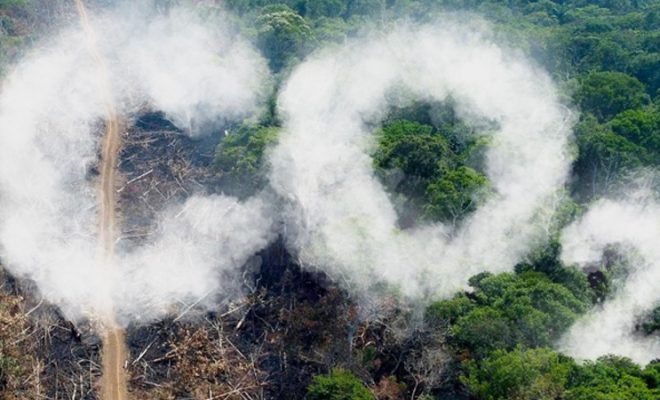
Deforestation and loss of biodiversity: A Planetary Drama
The Amazon is one of the regions of the world that has generated the most scientific, environmental and political alerts in recent decades. Humanity has its eyes on its 6.7 million km²—an area almost equivalent to Australia’s—of the largest tropical forest on Earth, which extends mainly across the Amazon basin, the planet’s most voluminous river.
This biome spans the territories of nine South American countries and is home to the world’s most extensive tropical forests, which store the most carbon: it is estimated that 50% of all CO₂ captured by forests around the Earth’s equator is concentrated in this vast region.
It is also essential for the planet’s water cycle: one hectare of forest evaporates and transpires seven times more than one hectare of sea, sending 22 billion tonnes of water into the sky every day.
This natural capital, essential to the Earth, is threatened by the risk of reaching a point of no return: savannisation. This process spreads when temperatures rise, rainfall decreases, and dry seasons lengthen. If the forest ceases to absorb carbon and begins to emit it, what was once a solution becomes a problem.
Although Brazil and Colombia have made progress in curbing deforestation, the challenge is global. The Amazon will not survive if atmospheric warming continues: its fate is tied to humanity’s collective commitment. In this sense, the fund for the conservation of tropical forests, funded by governments and companies, represents progress.
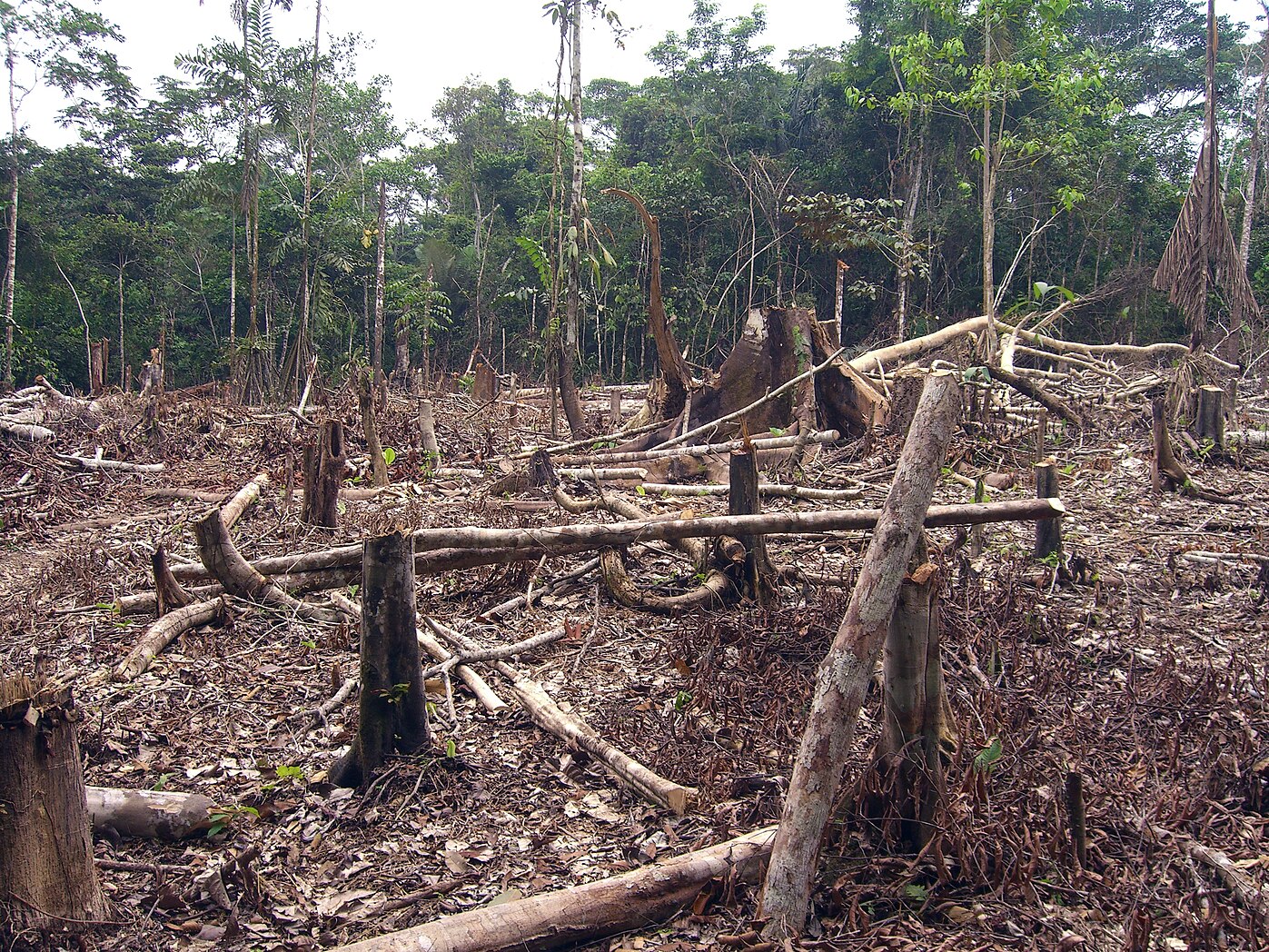
Although Brazil and Colombia have made progress in curbing deforestation, the challenge is global.
Latin America: a bank of solutions
Latin America and the Caribbean arrived at COP30 with the recent memory of the devastating Hurricane Melissa and the United States’ withdrawal from the Paris Agreement. The region faces a double limitation in water matters: a significant financing gap and limited implementation capacity.
A month before COP30, at the Latin America and Caribbean Regional Water Week 2025, organised by ECLAC in Santiago de Chile, Carlos Garriga, director of the Foundation, underlined the importance of community alliances to overcome these endemic problems. He explained that trust in local entities is key to successful projects and quoted an old African proverb to emphasise the need for long-term alliances: “If you want to go fast, go alone; if you want to go far, go together.”
The debates of the Week showed that Latin America and the Caribbean have been dragging for decades the key problems that occupied much of the discussions in Belém, where it was reiterated that, COP after COP, truly binding and short-term executable agreements that can be applied in the areas most affected by climate imbalances have not yet been reached.
The urgency of cooperation for management
In Belém, we also took part in the debate Global Water Resilience in Mediterranean Climatic Regions, org, organised by Fundación Biodiversidad at the Spanish Pavilion of the COP. The session aimed to promote an international dialogue on strategies, policies, and governance models that strengthen water resilience, grounded in innovation, the circular economy, and public-private collaboration, with special attention to Mediterranean climates.
The debate broadened the focus on the similarities that the concept of “Mediterranean climate” shares with vast areas of the world, from California to Australia. Carlos Garriga corroborated this global vision: “Climate uncertainty and the increase in droughts and floods not only affect the Mediterranean, but they also extend to the Amazon. We are facing a problem that manifests itself in similar ways in different regions of the planet, and which demands cooperation beyond borders and biomes.”
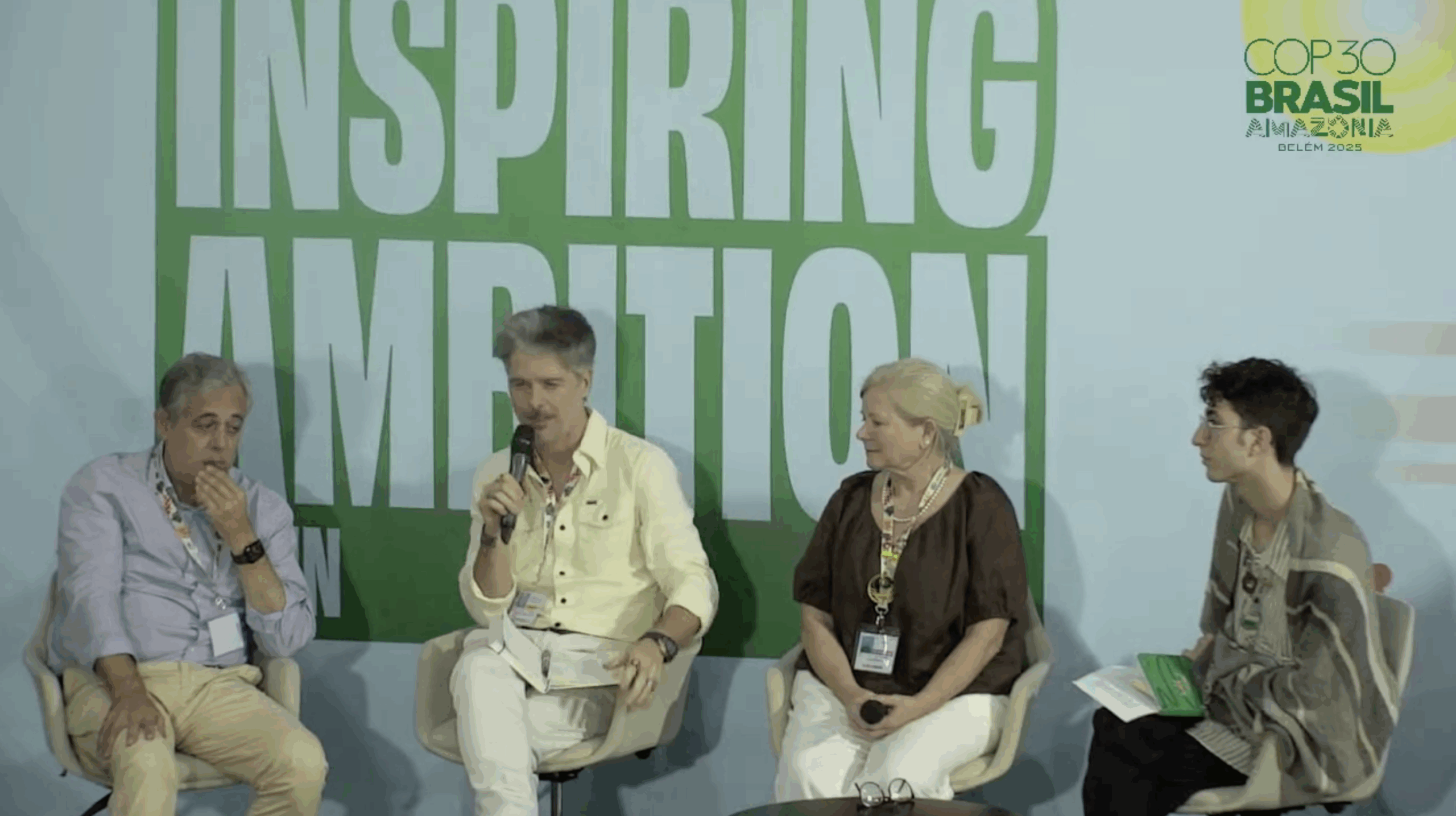
In Belém, we also took part in the debate Global Water Resilience in Mediterranean Climatic Regions, org, organised by Fundación Biodiversidad at the Spanish Pavilion of the COP
And what about emission reductions?
At every COP, the alarm over emissions persists, along with the sense that very little progress is being made. The data are stark: in 2024, global energy-sector emissions reached 3 billion tonnes of methane and 37.4 billion tonnes of CO₂, almost nine times the emissions from deforestation.
The outcry from the countries that emit the least and suffer the most from warming is clear: it is essential to redirect the seven trillion dollars (yes, millions of millions) that, according to the IMF, subsidise fossil fuels each year towards investments that strengthen nationally determined contributions (NDCs). What is evident is that without a roadmap for fossil fuels, insufficient financing and truly binding commitments, we are still far from guaranteeing that we will not exceed the 1.5 °C threshold set by the IPCC.
International cooperation remains alive, but it needs to be translated into immediate action. Government development plans, climate commitments and science must converge. And the challenge is no longer to invent, but to amplify: to scale up solutions with intelligence, will and alliances. If climate change is global, so too must be the responses.