
Event organized by the We Are Water Foundation, ALTAMIRA Regenerative Finance, Rainforest Flow, Grupo Rotoplas & Stockholm Environment Institute
Context
Across LAC, water progress depends on redesigning fragmented systems while reconnecting institutions, data, integrated planning, finance, and decision-making across scales. This session explores how community-led, place-based solutions, basin governance, circular transitions, and regenerative approaches strengthen adaptation and resilience, advancing transformation to deliver measurable outcomes for people and the environment.
Session description
Water systems across LAC face pressures from climate variability, ecosystem degradation, land use change and accelerated urbanization. While innovations are emerging, progress remains constrained by fragmented governance, misaligned regulation, and isolated investments.
This session examines how a systemic approach to designing water security and climate adaptation strategies can lead to durable progress. It focuses on three interconnected dimensions. First, place-based systems: aligning service delivery models with hydrological and territorial conditions, including decentralized, frugal, and fit-for-purpose systems paired with governance models that ensure long-term sustainability. Second, basin governance: strengthening coordination between utilities, basin authorities, regulators, communities, companies, and development actors to reduce fragmentation and improve accountability. Third, circular and regenerative approaches: embedding reuse, efficiency, and watershed restoration within broader resilience strategies.
Pioneering experiences will illustrate how institutional innovation enabled integration across scales from isolated projects to basin-wide planning. Panelists will reflect on enabling conditions, data, models, investments, governance and procurement frameworks adjustments for sustained progress.
The session highlights LAC’s shift toward integrated water systems that connect people-centered service delivery with basin-scale governance, structural transformation, and measurable progress towards climate adaptation and resilience.
Session description
The session will be structured around four interconnected questions that will guide the discussion:
- Where are water systems currently disconnected?
- What needs to be connected for water-related initiatives to deliver broader, lasting impact?
- How should institutions and organizations rethink their roles to enable systemic transformation?
- How can finance accelerate the transition from individual projects to systemic change?
From the outset, participants will play an active role in shaping the conversation. Their questions and reflections will be revisited throughout the session, providing a common thread for the discussion and laying the foundation for the segment focused on financing.
Where and when
27 August 2026 – Stockholm Waterfront Congress Centre
02:00 to 03:30 pm
Location: C4, Level 2
Attendance registration
Limited seats. Attendance is available both in person and online..
Objectives
To explore how to move from isolated water projects towards integrated systems that connect place-based implementation, governance, innovation, finance, and institutional collaboration to deliver lasting water security outcomes. Through practical case studies, audience participation, and two interconnected panel discussions, the session will identify the key connections needed to drive systemic transformation.
Agenda
02:00 – 02:05 pm
Welcome
Mónica Altamirano-de Jong, Founder, ALTAMIRA Regenerative Finance
14:05- 14:10 pm
Short documentary
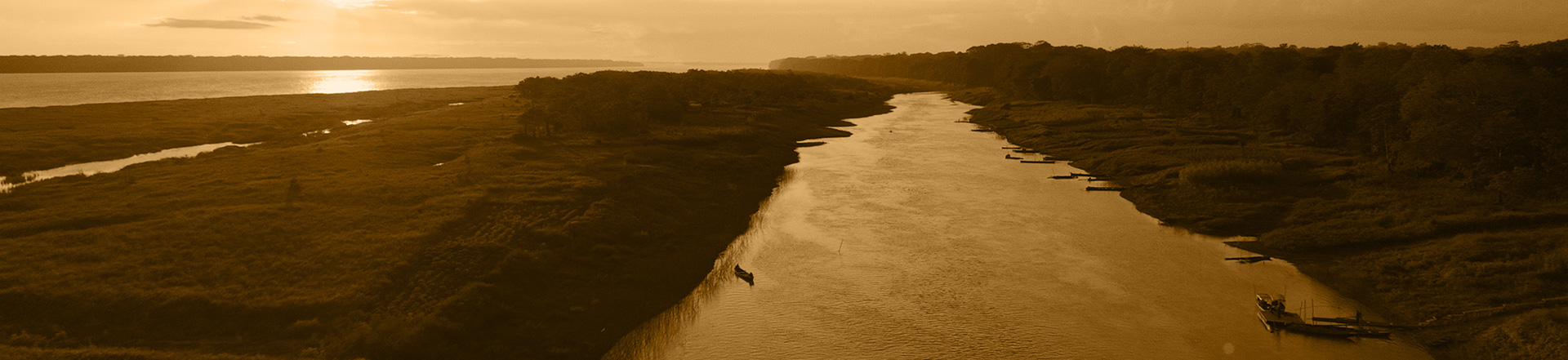
Screening of the documentary Amazon: The Memory of Water (We Are Water Foundation and World Vision). The documentary will provide an overview of the key water security challenges facing Latin America and the Caribbean, highlighting the region’s diverse realities while introducing the systemic perspective that will underpin the rest of the session.
Watch Amazon: The Memory of Water.
02:10 – 02:20 pm
Setting the scene: What systemic progress looks like
Laura Forni, Stockholm Environment Institute
We will draw together the documentary’s key messages, the audience’s responses, and the overarching purpose of the session.
02:20 – 02:50 pm
Panel 1. Rethinking roles for effective collective action
NGOs, Foundations and Corporate actors working in the region reflect on the evolution of their roles to meet the region challenges. Each will share pioneering initiatives that reflect these changes in specific regions of LAC. To finalize they discuss about the need and potential of unusual partnerships and the remaining challenges to achieve water security, including access to finance.
Maggie McDow, Rainforest Flow. Community-led and place-based water systems.
Carlos Garriga, We Are Water Foundation. Foundations, service delivery and institutional sustainability.
Paola Flores Hernández, Water Stewardship Manager, Grupo Rotoplas. Corporate transformation, circular water solutions and basin resilience.
Moderated by Mónica Altamirano de Jong, Founder, ALTAMIRA Regenerative Financee
02:50 – 03:00 pm
Interactive audience engagement, both on-site and online.
03:00 – 03:20 pm
Panel 2. Emerging financing opportunities
Impact investors and development banks operating across the region will examine the evolving financing landscape for water security and discuss how new partnerships and evolving stakeholder roles can enhance the region’s capacity to mobilise climate, biodiversity and other sources of catalytic finance.
Stephen Hart, Principal Advisor for Nature and Water, Public Sector Lending, EIB.
Moderated by Mónica Altamirano de Jong, Founder, ALTAMIRA Regenerative Finance
Other panelists TBC.
03:20 – 03:30 pm
Closing words
Closing remarks summarising the session’s key takeaways and the main messages shared by the invited panelists/convenors.
.
Speakers
Our panel of speakers includes:
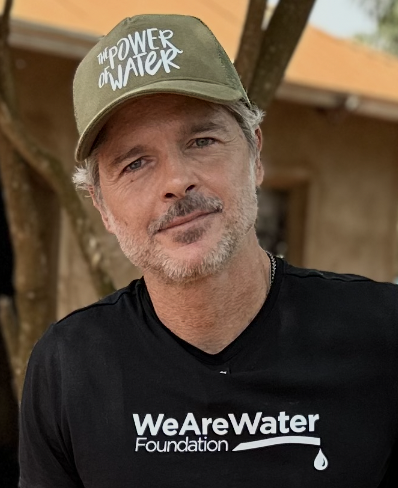
Carlos Garriga
Director We Are Water Foundation
Degree in Business Administration and Management from the University of Barcelona, with a postgraduate degree in Protocol from UPF. He has developed most of his professional career in the field of communication, working for various agencies and companies such as the Roca Group or the RBA Editorial. In 2010, he began working as Project Manager, being responsible for coordinating the projects carried out by the Foundation together with international organizations such as Unicef, Oxfam Intermon or World Vision International; as well as various awareness initiatives worldwide.
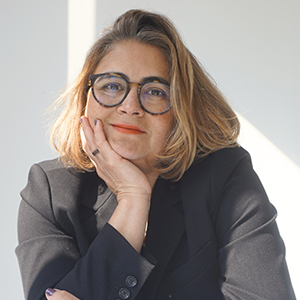
Mónica Altamirano de Jong
PhD, Founder Altamira Regenerative Finance
Mónica A. Altamirano de Jong, PhD, is Founder of Altamira Regenerative Finance, a Netherlands-based boutique strategic advisory advancing mission-driven investment planning to accelerate the transition to a regenerative economy. She is a strategic advisor, systems thinker, independent board member, host of the Investing in Regeneration podcast, and Salzburg Global Seminar Fellow, with expertise in public-private partnerships, regenerative investing and systems transformation.
Through her work, Mónica supports governments, development finance institutions, multilateral development banks, impact investors, philanthropic organisations, and businesses in designing investment pathways that bridge the gap between long-term ambition and implementation. With over 20 years of international experience, she has mobilised finance for resilient infrastructure, water security, climate adaptation, and nature-based solutions, advancing approaches that align public and private investment with long-term societal and environmental outcomes. Mónica serves as an Independent Board Member of CAEI, one of the Dominican Republic’s leading agro-industrial groups, where she champions the integration of sustainability, climate resilience, and long-term value creation into corporate strategy. She also serves on the Board of Rainforest Flow, supporting innovative financing solutions that advance SDG 6 in partnership with Indigenous communities in the Peruvian Amazon.
.
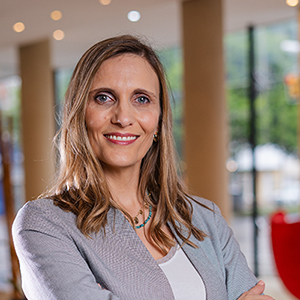
Laura Forni
Program Director Stockholm Environment Institute
Laura Forni is the Water Program Director at the Stockholm Environment Institute U.S. with over 15 years of experience. She holds a master’s degree in agricultural and resource economics from the University of California, Davis. Laura specializes in linking water valuation and ecosystem services with environmental planning and regulations. Her expertise includes hydro-economic integration, decision support visualizations, and using WEAP software to incorporate social considerations in technically based projects. She has led impactful initiatives across Latin America, California, and beyond, addressing sustainable water management, climate change adaptation, and equitable policy frameworks.
.
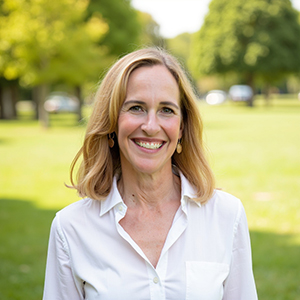
Maggie McDow
Vice President and Chief Development Officer at Rainforest Flow
Maggie McDow is Vice President and Chief Development Officer at Rainforest Flow, a nonprofit that partners with Indigenous communities in the Peruvian Amazon to improve health and protect rainforests through community-led water, sanitation, and hygiene (WASH) solutions. She leads the organization’s fundraising, strategic partnerships, and board engagement, mobilizing philanthropic investment in sustainable approaches that strengthen both community well-being and environmental stewardship.
With more than a decade of nonprofit leadership experience, Maggie has built high-performing development programs, cultivated major philanthropic partnerships, and developed strategies that connect environmental conservation, public health, and community development. Earlier in her career, she spent more than a decade working in the U.S. Congress, where she focused on education and environmental policy.
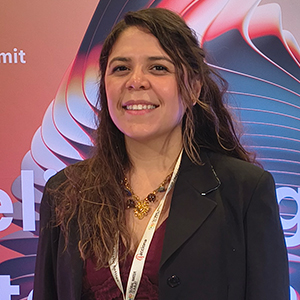
Paola Flores
Water Stewardship area lead at Grupo Rotoplas
Paola Flores Hernández leads the Water Stewardship area at Grupo Rotoplas, advancing the company’s role as a Water Resilience Ally across Mexico and Latin America. She helps organisations identify their water risks and develop projects to address them across communities, operations, supply chains and watersheds. Her work aims to improve water access, strengthen climate resilience, support local livelihoods and protect shared water resources over time.
Paola has more than a decade of experience in water, climate and sustainability across the private sector, international organisations, academia and civil society. She has led water stewardship strategies in priority basins across Mexico and Latin America, bringing together companies, farmers, public institutions, universities and civil society organisations to improve water management, advance climate adaptation and strengthen basin resilience.
She holds two master’s degrees in sustainable development, including an MSc in Sustainable Food Systems from the University of Leeds.
.
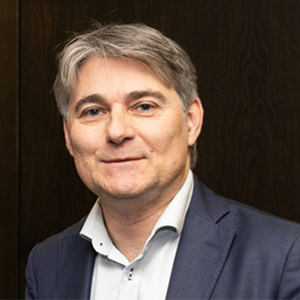
Stephen Hart
Principal Advisor for Nature and Water, Public Sector Lending, EIB
Stephen Hart is a financial advisor at the European Investment Bank, working on nature and climate adaptation financial advisory, including design of financial instruments. He has 30 years of experience of project development and financing in the environment and infrastructure sectors.
After 10 years in planning and project management for water services in local government and international consulting, he joined EIB in 2005 to develop and appraise major projects and programmes in the water sector inside and outside Europe. He was appointed as Head of EIB Group Office in Copenhagen in 2015, covering Danish and Arctic affairs and engaging with the banking sector and public sector entities. In 2019 he joined the Infrastructure Fund Division as an investment officer and the focal point for the Natural Capital Financing Facility, the EUs first dedicated nature financing instrument. He was also involved equity transactions in a variety of other sectors, including transport and energy.
Since 2022, Mr. Hart has been a principal advisor in the areas of water and nature within the EIB Public Sector lending department. Mr Hart holds degrees in Civil Engineering, Environmental Science, Communication and Finance.
Organizers and convenor
We Are Water Foundation, ALTAMIRA Regenerative Finance, Rainfost Flow, Grupo Rotoplas, Stockhom Environment Institute.