At World Water Week, we have shown that water security requires integrating decisions, actors and scales within a systemic approach.
“When communities understand that if everyone works together, everyone has water.” These words from Paola Flores, a specialist in water‑related risks and in designing projects that secure water, resilience and shared development, summarise a crucial principle for ensuring universal access to water: when a community understands that water depends on everyone, the cooperation that makes it possible emerges.
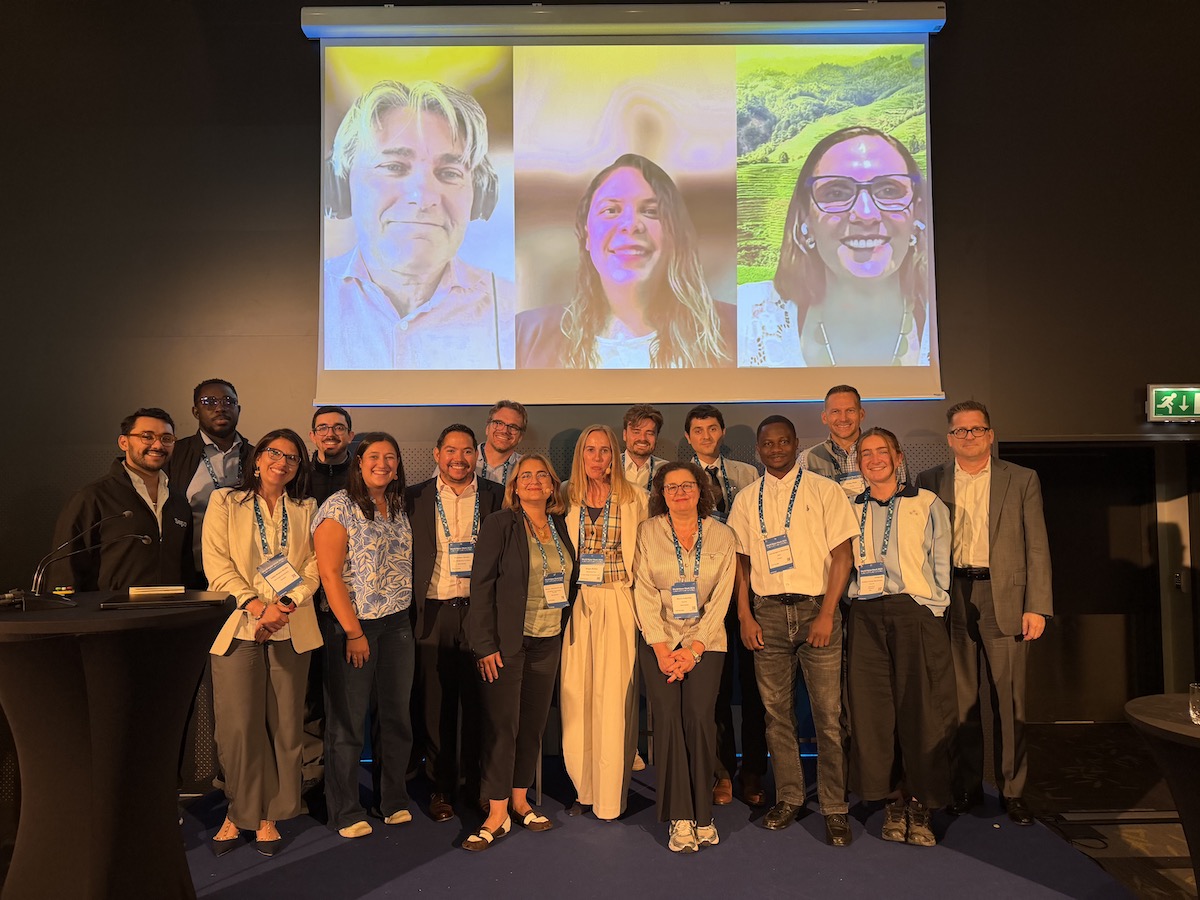
This idea shaped the debate, Designing systemic progress in water security for LAC, organised together with ALTAMIRA Regenerative Finance, Rainforest Flow, Grupo Rotoplas and the Stockholm Environment Institute at the latest World Water Week in Stockholm, the world’s most important global water event. It was a space where we once again demonstrated how Latin America and the Caribbean can transform their water‑related complexity into solutions, innovation and leadership, and where we took a further step towards shaping financing strategies capable of accelerating that systemic progress.
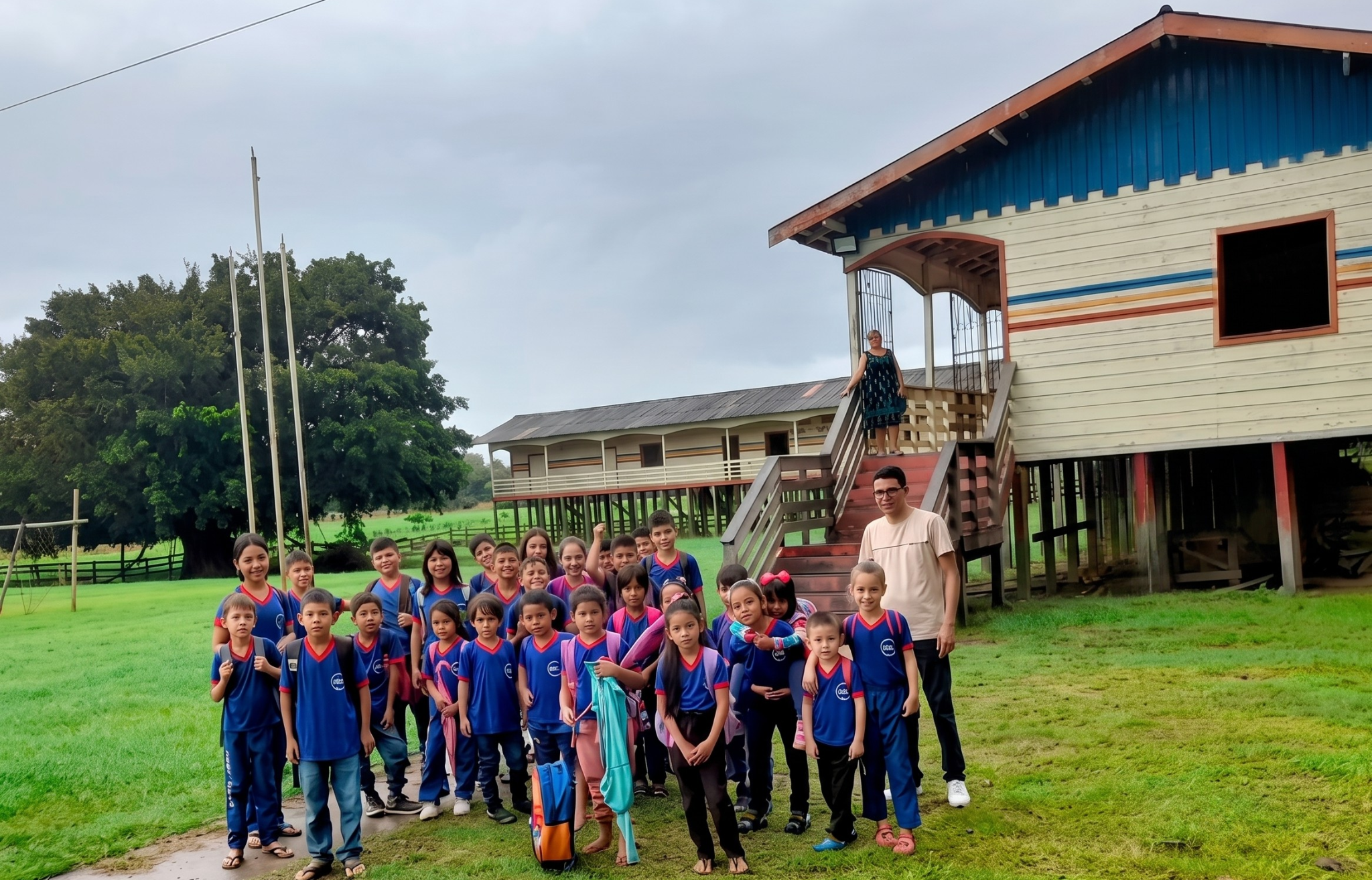
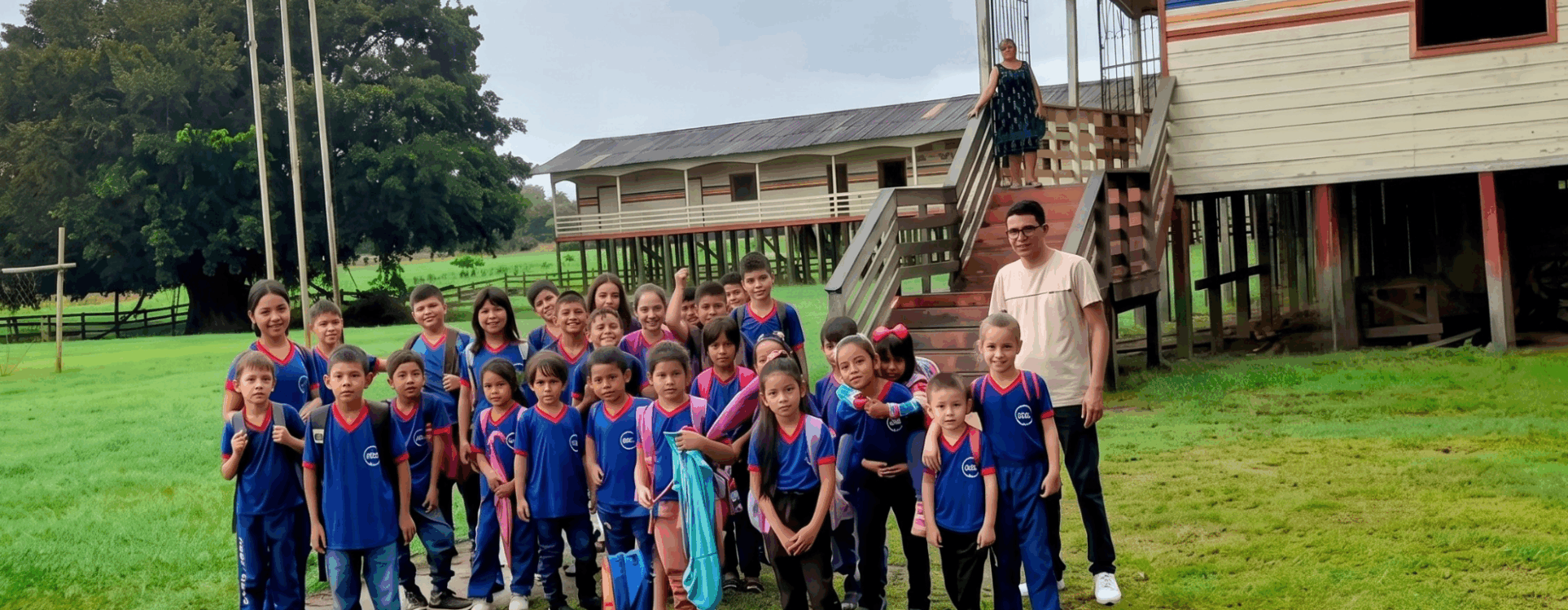
From the Foundation, after 16 years, we have extensive knowledge of the situation of water access in Latin America and the Caribbean (LAC).During this time, we have developed 17 aid projects in Brazil, Colombia, Mexico, Nicaragua, Honduras, Guatemala, Bolivia, Ecuador and Peru.
Cooperation overcomes complexity
From the Foundation, after 16 years, we have extensive knowledge of the situation of water access in Latin America and the Caribbean (LAC), a territory of 20 million km² and 660 million inhabitants who share a significant paradox: they possess one of the largest amounts of freshwater per capita and, at the same time, suffer some of the highest rates of water vulnerability, increasing climate variability and a lack of basic infrastructure across large segments of the population.
During this time, we have developed 17 aid projects in Brazil, Colombia, Mexico, Nicaragua, Honduras, Guatemala, Bolivia, Ecuador and Peru. This experience in rural water access and sanitation, regenerative agriculture, school hygiene and the needs of Indigenous communities has allowed us to understand first‑hand the diversity of LAC’s physical, human and climatic geography.
Each of the nearly 400,000 people we have supported represents a piece in the mosaic of a complex human geography of stark contrasts: advanced regions coexist with ancestral Indigenous communities whose rich cultures are threatened by structural poverty and forced displacement; successive migration crises suddenly increase sanitation and hygiene needs in territories with limited resources.
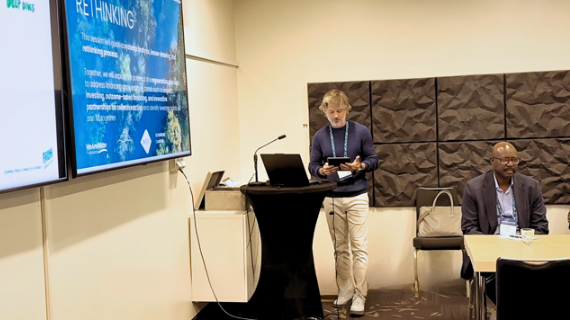
Carlos Garriga, the Foundation’s director, summarized the challenge: “We have to find ways to transform the economy—to regenerate it—in order to implement solutions, and this means addressing the financing and implementation gaps.”
Designing decisions, a step forward
Throughout this process, we have closely followed the fundamental challenge of financing access to water. At the ninth edition of the Latin American Impact Investment Forum, FLII 2025, we showcased the successes and transformative opportunities of our projects. We encouraged the creation of a unique platform to highlight solutions rooted in local realities.
That same year, we brought the financing debate to World Water Week 2025, in a meeting that marked the path towards COP30 in Belém. In the session, organised jointly with ALTAMIRA Regenerative Finance, we demonstrated that financing universal access to these basic rights requires new forms of cooperation, innovation and political commitment. Carlos Garriga, director of the Foundation, summarised the challenge: “We need to find ways to transform the economy, regenerate it to apply solutions, and this means addressing the financing and implementation gaps.”
This past August, at World Water Week, we took another step forward in accelerating processes and establishing routes for action. The debate’s moderator, Mónica Altamirano, emphasised this urgency and the evidence of the progress being made. As Laura Forni, senior researcher at the Stockholm Environment Institute (SEI) and specialist in multiscale water planning, said during the debate, “it is time to design decisions, not just projects.”
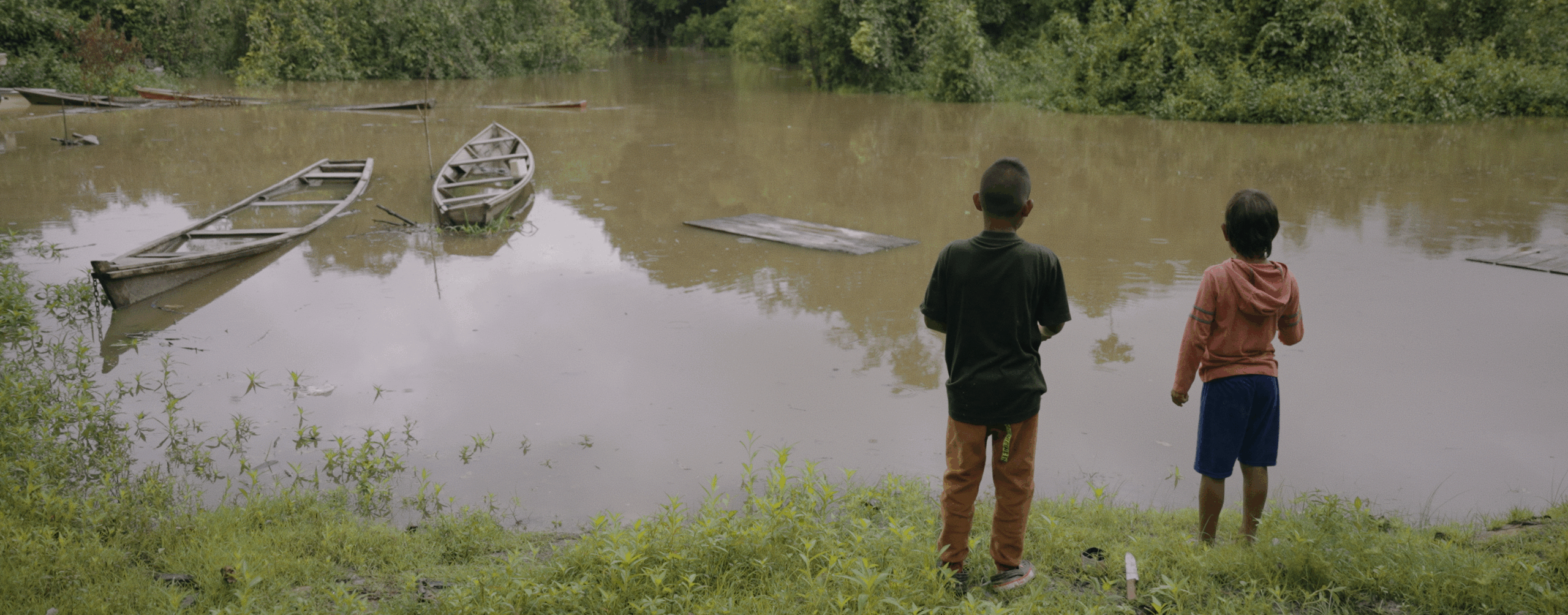
One of the working materials at this World Water Week was the documentary Amazonas: La memoria del agua, directed by Ignasi Rodríguez and Carlos Garriga, a work that precisely illustrates the pressure faced by Amazonian communities, whose habitat is being altered by pollution and climate change.
The great forest habitat
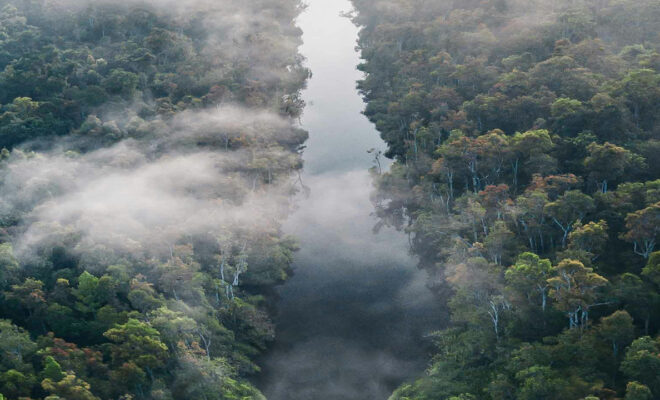
In LAC, the tropical forest—almost 800 million hectares, from the Amazon to the Andean cloud forests and Caribbean mangroves—is not merely a landscape: it is natural infrastructure of ecosystem services. It sustains river basins, regulates the climate, generates biodiversity and shapes the lives of millions of people.
According to the FAO and comparative studies published in World Development, more than 54 million Indigenous people live in forest territories in Latin America and the Caribbean, and non‑Indigenous residents in forested areas outnumber Indigenous populations by more than eight to one. In total, an estimated 400 million people inhabit forest ecosystems or tropical forests in the region. Most live under increasing pressures: deforestation, expansion of industrial agriculture, degradation and territorial inequality. These dynamics generate structural tension and growing water and climate risks.
Maggie McDow, director of Rainforest Flow, showed how in remote Amazonian communities the most effective systems are those designed by the community and for their own territory. She highlighted the advance of pollution and demonstrated that simple technologies based on geomembranes — transportable, durable and adapted to the tropical forest — can overcome the limitations of conventional systems.
Construction with local materials and the leadership of water committees ensure long‑term sustainability. The results are striking: a 94% reduction in diarrhoeal diseases in four years. She emphasised that community ownership, continuous training and coordination with local governments turn safe water into structural change, not an isolated project.
One of the working materials at this World Water Week was the documentary Amazonas: La memoria del agua, directed by Ignasi Rodríguez and Carlos Garriga, a work that precisely illustrates the pressure faced by Amazonian communities, whose habitat is being altered by pollution and climate change.
Connecting communities means co‑designing
Laura Forni, senior researcher at the Stockholm Environment Institute, stressed that water challenges are experienced locally but can only be resolved by connecting communities, river basins and national frameworks through coherent decisions across scales. She explained that institutional fragmentation, lack of coordination, regulatory weakness and data scarcity prevent initiatives from generating broad impact, and that overcoming these barriers requires co‑design, democratisation of knowledge and adaptive planning. Her message was clear: transforming local initiatives into systemic change requires linking community action with hydrological models, accessible tools, policies, and investments at basin and national scale.
In the same vein, Paola Flores Hernández, Water Stewardship Manager at Grupo Rotoplas, showed how collaboration between sectors and institutions can strengthen territorial water resilience. She demonstrated that private initiative can unlock capacities and accelerate solutions that traditionally fall to the public sector. Her central message aligned with Forni’s: when companies, public actors and basin users collaborate, business action not only improves water quality and promotes reuse, but also reduces extraction and reinforces water resilience at territorial scale.
Stephen Hart, Senior Advisor at Stantec, presented a hybrid financial model for ecological restoration that integrates mandatory instruments, voluntary markets and public funds. He showed that ecosystem benefits can outweigh costs, positioning restoration as essential infrastructure for water resilience in LAC.
Aqua Nexus: a financial and operational mechanism
Aqua Nexus was presented as the We Are Water Foundation and World Vision’s new regional platform to accelerate water resilience and climate justice in Latin America and the Caribbean. Aqua Nexus is a financial and operational mechanism designed to attract, channel and execute public, private, philanthropic and climate investments directly in communities. It combines progressive financing, blended finance and pay-for-results models. Its purpose is to scale solutions and turn access to water into opportunity.
A regional Social Laboratory supports its approach by co-creating solutions adapted to arid contexts, tropical forests, urban environments, and even protracted crises.
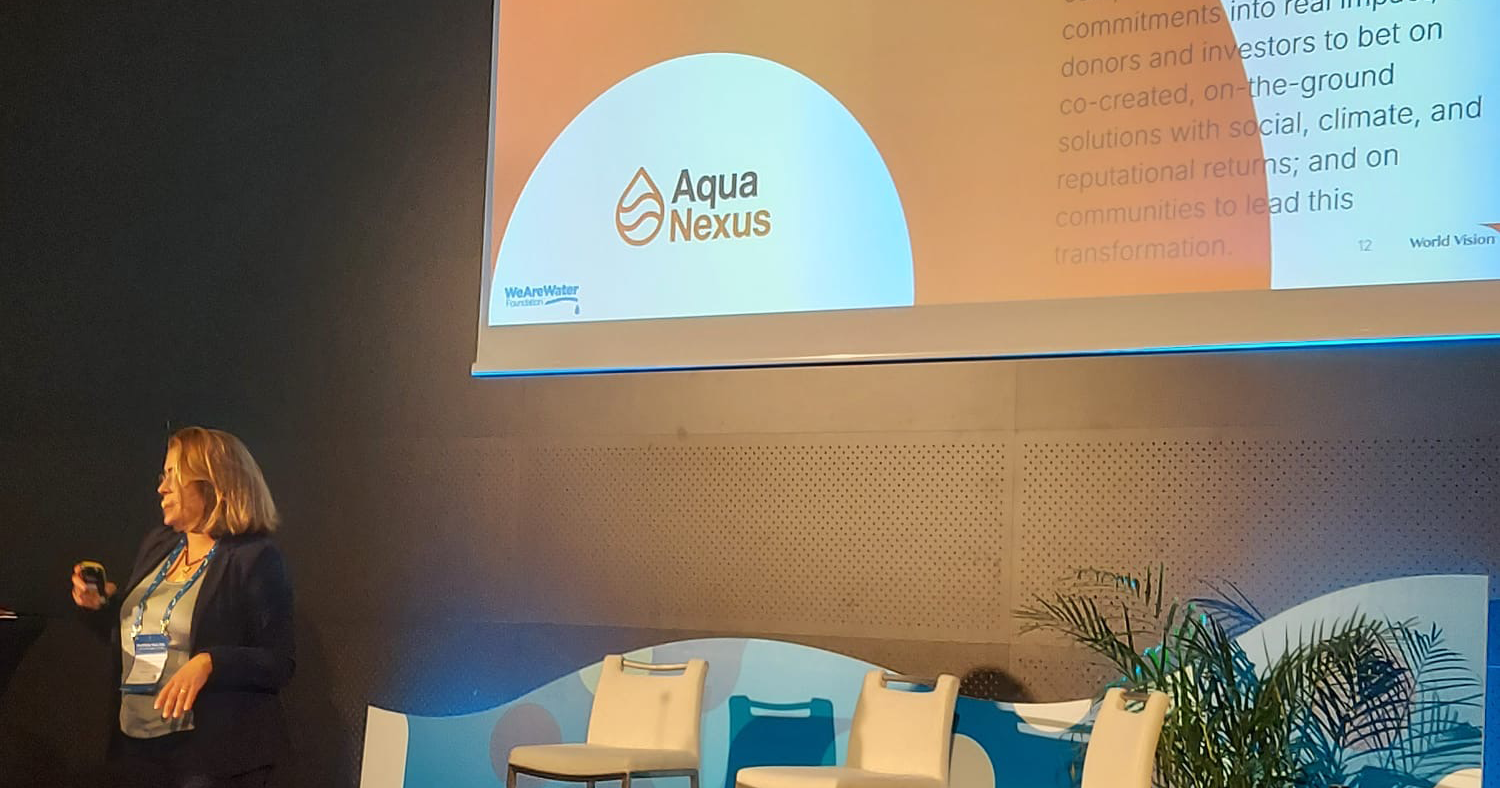
Aqua Nexus was presented as the We Are Water Foundation and World Vision’s new regional platform to accelerate water resilience and climate justice in Latin America and the Caribbean.
Water security before mid-century
LAC’s water complexity is immense, but so is its potential to generate solutions. The region shows that community innovation, ecological restoration and new financial mechanisms are redefining how water security is built in the 21st century. Those of us who work with vulnerable communities know this well: when a community understands that water depends on everyone, the cooperation that makes it possible emerges. Water only flows when decisions, actors and territories are connected.
At World Water Week, it became clear that water security requires integrating social, economic, and climatic factors within a common systemic approach. Collaboration already exists, and LAC offers solid evidence: strengthening and showcasing it is the best way to mobilise financin.