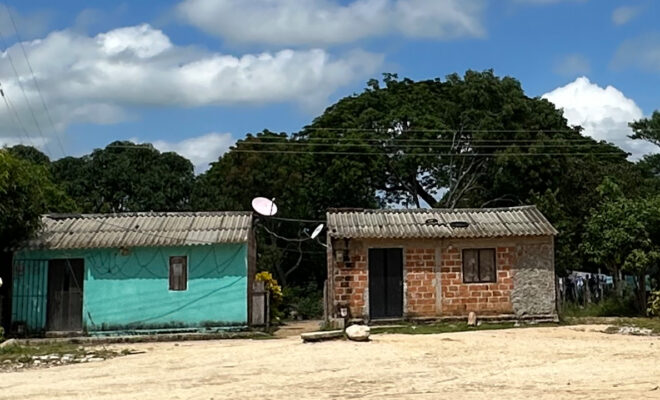

The women of Los Moreneros, in the La Guajira Peninsula in northern Colombia,, know that what they collected in their containers was not only water, but risk and delay. The contaminated water from the Tablas River was a risk to their health and that of their children; a delay for education and for recovering the cassava and maize crops damaged by drought; a delay for the development and empowerment of a community that, with a rich cultural heritage and a turbulent history, struggles in oblivion.
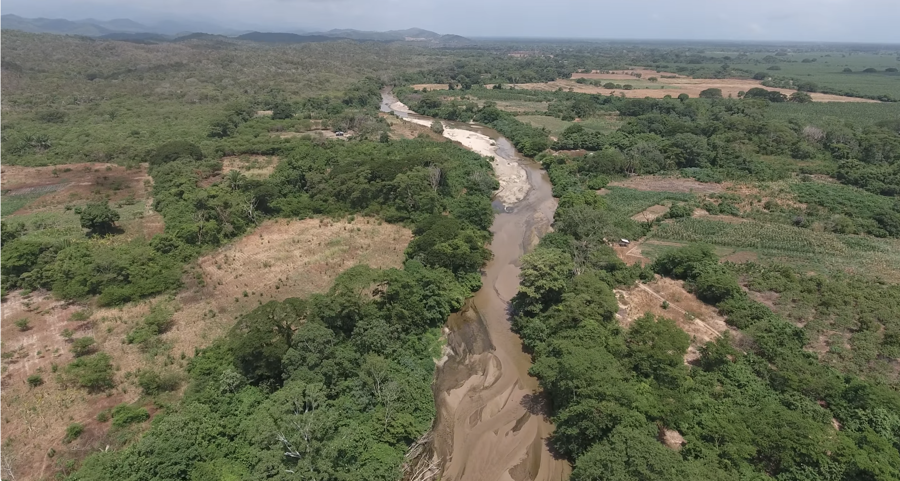
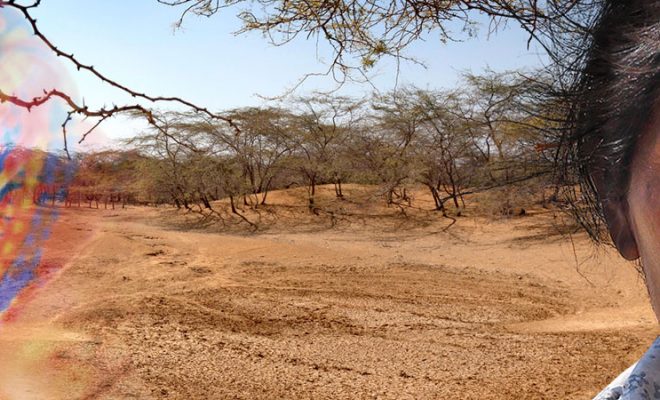
The Tapias River flows through the La Guajira Peninsula in Colombia, exhausted and polluted by droughts and mining discharges. © Juank Medina
Few know their history: the epic of their African ancestors who were victims of slavery; their struggle for coexistence with the native Wayúu; their difficult place in a region stressed by climate change and migratory pressure.
In recent decades, poor water quality has caused childhood illnesses and poverty. Despite government efforts to guarantee access to water and mitigate the environmental crisis, the La Guajira peninsula has not yet achieved water security and faces an uncertain future amid the combined effects of climate change and an industrialisation model that has not always taken local communities into account.
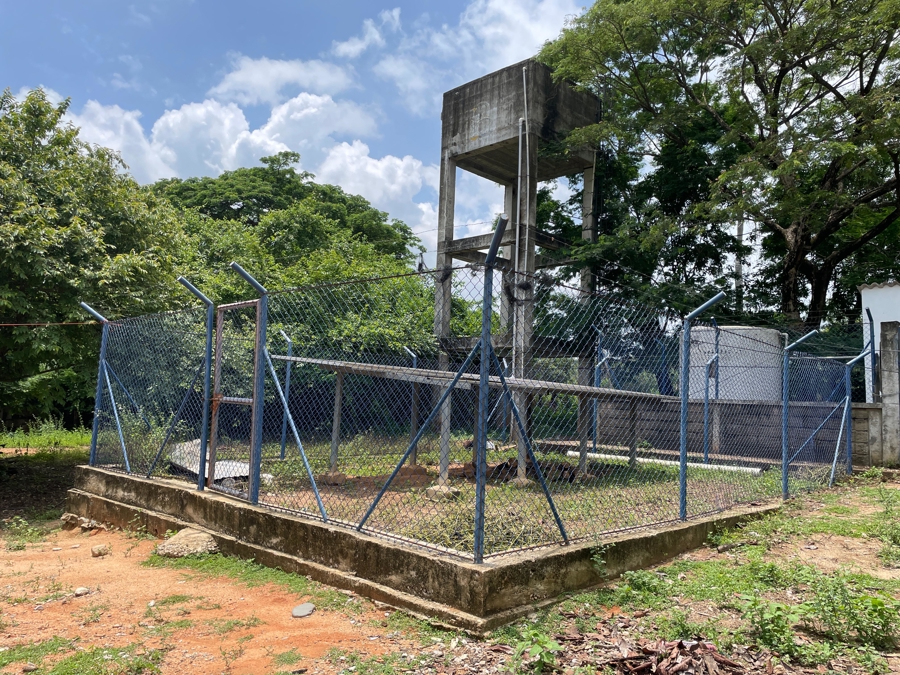
Last year, we immersed ourselves fully in the reality of this community. The facilities meant to guarantee sufficient, safe water had been designed decades earlier to withstand increasing droughts and pollution, but lack of maintenance had left them obsolete and, in practice, unusable. © World Vision
Facilities recovered from oblivion
Last year, we immersed ourselves fully in the reality of this community. The facilities meant to guarantee sufficient, safe water had been designed decades earlier to withstand increasing droughts and pollution, but lack of maintenance had left them obsolete and, in practice, unusable.
In July, we completed a project in Los Moreneros that has brought a crucial change to the community’s quality of life and a real opportunity to leave behind the consequences of abandonment: the repair of infrastructure and, above all, the training to self-manage its maintenance.
The community had a well about eight metres deep, an elevated storage tank of around 30,000 litres and a reverse osmosis treatment plant that was never used and had already become unusable. No one had the technical knowledge to start up or repair the system.
Our intervention, in collaboration with World Vision and with the funds raised in the 2025 Walkathons for Water, has enabled the recovery of the old facilities: we rehabilitated the well, built two concrete tanks of 10,000 litres each, and restarted the osmosis system, now powered by new photovoltaic panels.
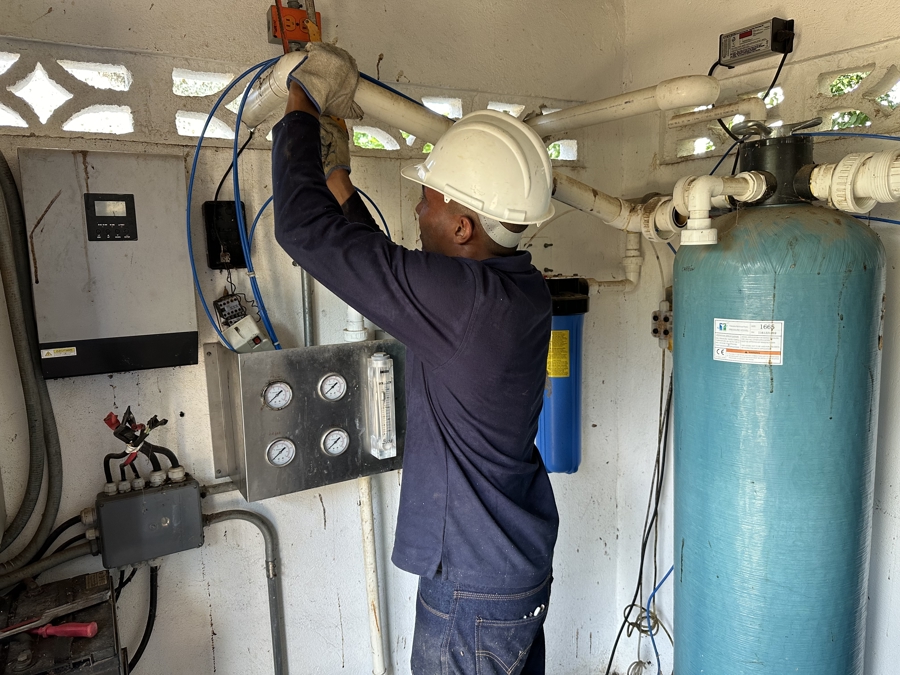
Restored reverse osmosis water treatment facilities. © Word Vision
In this video, Carlos Garriga shows the results of the intervention:
A trained and empowered community
The added value of the project lies in its comprehensive approach: in addition to ensuring sustainable access to safe water, we create protective spaces that recognise and preserve the community’s cultural context. It is a model that we have found effective in the 40 countries where we intervene: solutions adapted to families and their environment, accompanied by the training needed for the community itself to take on the sustainability of the system.
This commitment is essential to leave behind harmful habits of consuming surface water. As Carlos Garriga points out: “The easiest part of our projects is the construction of the infrastructure; the most difficult is the change in behaviour and convincing communities that, very often, the changes are for the better.”
Indeed, it does not matter the country, region, or continent. Historical abandonment generates suspicion, resistance and, at times, mistrust towards unexpected help. Unhealthy habits are tackled with knowledge and training, but that is not enough; it is necessary to empower people to manage their own systems, creating a stable and participatory social fabric around the water committees, which serve as the bridge between the community, local authorities, and the institutions that provide support.
Our experience shows that, progressively, the community —and especially the women, key to changes in family behaviour— achieves full sustainability of the facilities.
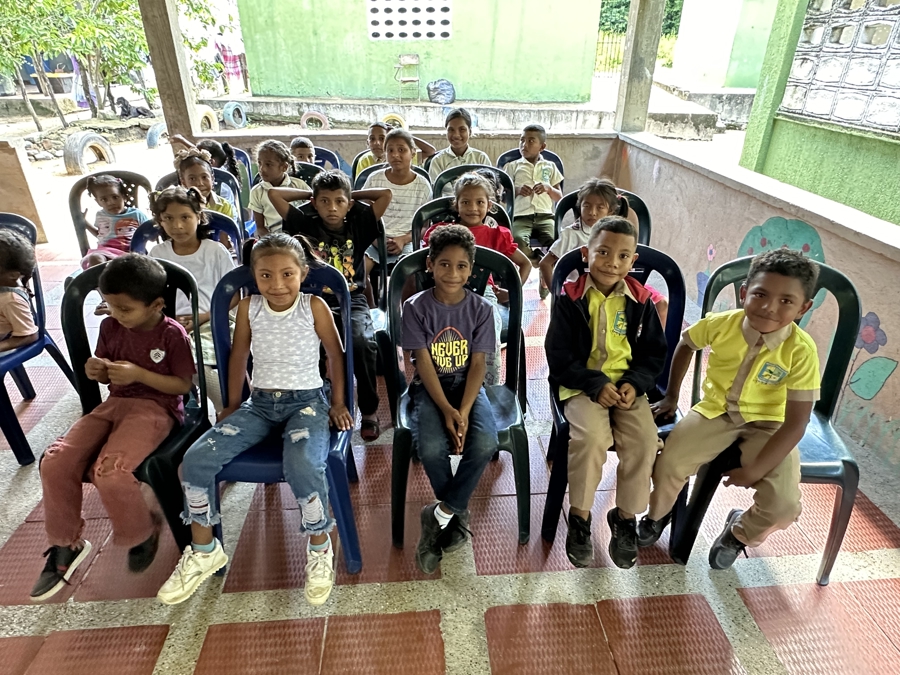
Students from Los Moreneros who have benefited from the new facilities. © Word Vision
Resilience in the face of climate change
The Tapias is no longer a river: it is an indicator. A thermometer of the water crisis that suffocates La Guajira and that, in recent years, has become more severe and prolonged. The Caribbean peninsula is the driest region of Colombia: 41% of its territory is desert scrubland, and barely 1% is humid forest. Rainfall is scarce and increasingly irregular, and the rivers, when they do not disappear, are reduced to threads of water incapable of sustaining life.
The situation for communities such as Los Moreneros became dramatic as the alterations in the El Niño and La Niña phenomena intensified. According to the Institute of Hydrology, Meteorology and Environmental Studies of Colombia (IDEAM), each recent episode of El Niño has reduced rainfall by 30% to 60%, leaving rivers such as the Tapias at critical levels and deepening the structural water crisis in the department. The institution warns that La Guajira will be one of the regions most affected by climate change in the country—and in the Caribbean.
To this scarcity is added a growing environmental deterioration. The National University of Colombia describes an alarming scenario due to pollution from open-pit coal mining and the privatisation of the best water sources for industrial use. In this context, depending on the Tapias meant for Los Moreneros not only walking long distances, but also exposing themselves to water that was increasingly contaminated and less available.
The new facilities of the project are designed precisely to guarantee resilience in the face of this changing scenario: to ensure safe water even when the climate does not allow it, and to reduce the vulnerability of a community that lives on the front line of the climate crisis.
To know the history, to integrate respect
The water of the Tapias sustains life in Los Moreneros, but it also reveals a deeper wound: that of a community that has had to adapt for centuries to adverse conditions. Its roots lie in the African diaspora that reached the Colombian Caribbean between the sixteenth and nineteenth centuries, when thousands of people were brought from West and West‑Central Africa by slave‑trading networks controlled first by Portugal and later by Spain. Cartagena de Indias was the great port of entry; La Guajira, a territory of redistribution, smuggling and frontier.
In that complex landscape, marked by tensions between the colonial state and the Wayúu peoples, small Afro‑descendant settlements emerged seeking autonomy and land. The dispersal of their inhabitants gave rise to communities such as Los Moreneros, which, since then, have coexisted with the Wayúu in a fragile balance, always conditioned by water scarcity and state absence.
Understanding Los Moreneros requires looking beyond the urgency of water. Their present is marked by drought, but their identity was forged long before, in a journey that crosses oceans, borders and silences. To work with this community—and to accompany it in the management of its own future—it is essential to recognise the history that sustains it and the traces of a territory that has been a frontier, a refuge, and oblivion.
Only from that deep knowledge is it possible to integrate respect into every intervention. Because water does not arrive in a vacuum: it arrives in a community with a rich cultural heritage, an admirable resilience and a history that deserves to be told.

Understanding Los Moreneros requires looking beyond the urgency of water. Their present is marked by drought, but their identity was forged long before, in a journey that crosses oceans, borders and silences © pexels-jibarofoto