
The warning is global. Industrial cooling is a critical link, and water has become a limiting factor for digital infrastructure in any industrialised or industrialising country. © pexels-tomfisk
Last August, an unusual and unexpected event added a disruptive factor to the world of water: Europe went through the worst hydrological drought in its recent history. Regardless of the damage caused by the heatwaves that marked the past boreal summer in Europe and North America, the phenomenon revealed a structural vulnerability little known to the public: industrial cooling depends on rivers that no longer guarantee sufficient flow or temperature. The industrialised North has entered an unprecedented adaptive phase that forces the drafting of plans that would have seemed unthinkable a couple of years ago.
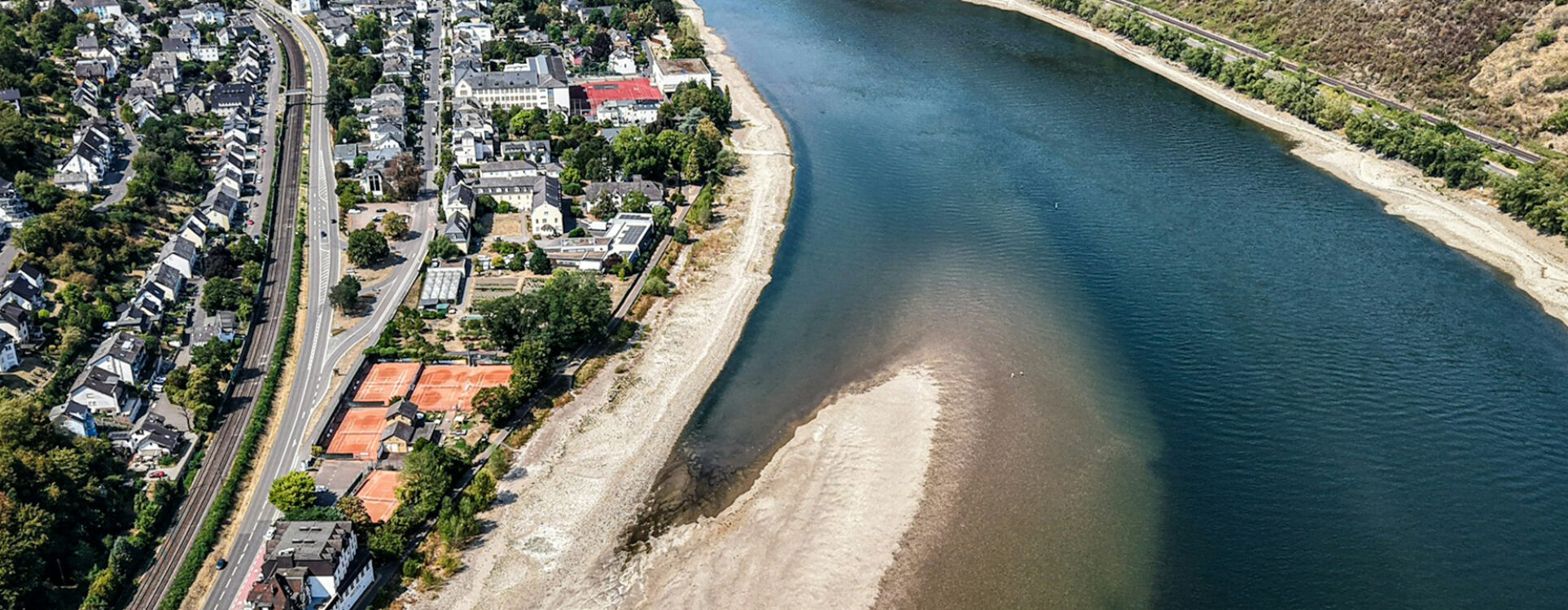
Europe has suffered recurrent meteorological droughts since 2018. Still, the summer of 2026 marked a turning point: meteorological drought rapidly transformed into hydrological drought, directly affecting the flows and temperatures of the continent’s major rivers. The Loire, Rhine and Danube basins recorded historic lows that paralysed entire sectors.
It is worth clarifying the correlation between hydrological drought and meteorological drought. In this article, we explained that meteorological drought occurs in a specific geographical region as a consequence of a prolonged period with below-normal precipitation, as was the case in this European August. Hydrological drought, on the other hand, is the prolonged lack of water in water resources. It therefore refers to the interruption of human use of water that is not found where it is sought, such as in rivers, lakes, reservoirs and aquifers.
It is common for hydrological drought to coincide with prolonged meteorological drought — as occurred in last August’s Central European episode — but increasingly, excessive use, pollution or wastage of water by human activities are causing hydrological drought even during periods of normal rainfall.
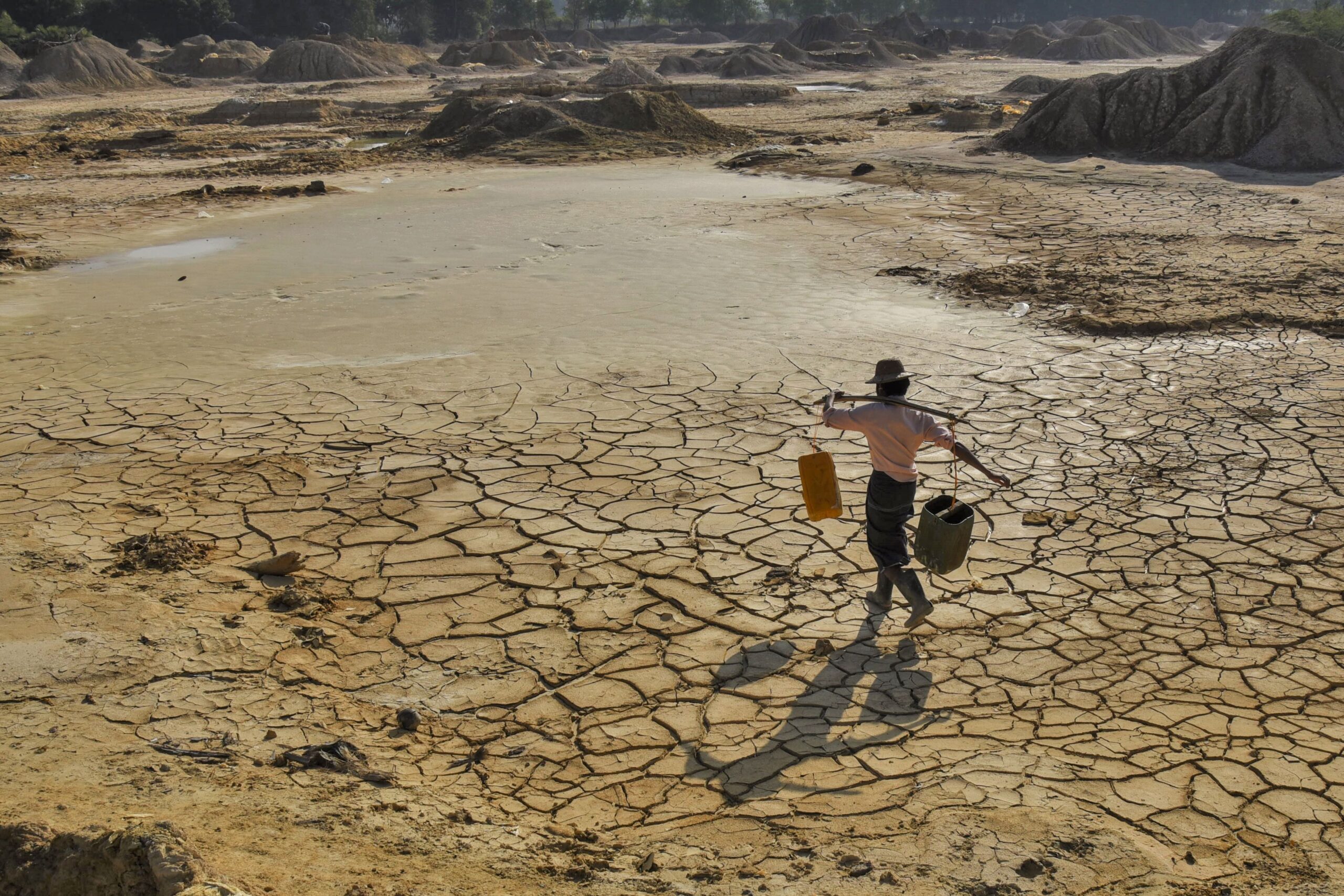
Hydrological drought, on the other hand, is the prolonged lack of water in water resources. It therefore refers to the interruption of human use of water that is not found where it is sought, such as in rivers, lakes, reservoirs and aquifers. © pexels-pyae-phyo-aung
River navigation at a minimum
The drastic drop in the flow of the major rivers has exposed forgotten wrecks from the First and Second World Wars, images that travelled around the world. But the interruption of navigation has had far deeper economic consequences. We show three significant examples:
- The Rhine fell 21 cm below the reference level at Kaub in the early hours of 3–4 August: the lowest level recorded this century and far below the threshold for economically viable navigation. The Kiel Institute for the World Economy estimated that the situation could subtract between 0.1 and 0.2 percentage points from Germany’s GDP in the third quarter.
- In France, the flow of the Loire fell below 40 m³/s in several stretches, forcing the suspension of river transport and restricting irrigation for certain crops across large agricultural areas in the centre of the country.
- The Danube, at Paks (Hungary), registered 131 cm below the reference level on 1 August, compared with the previous historic minimum of −98 cm in 2018.
When the lack of water shuts down a nuclear power plant
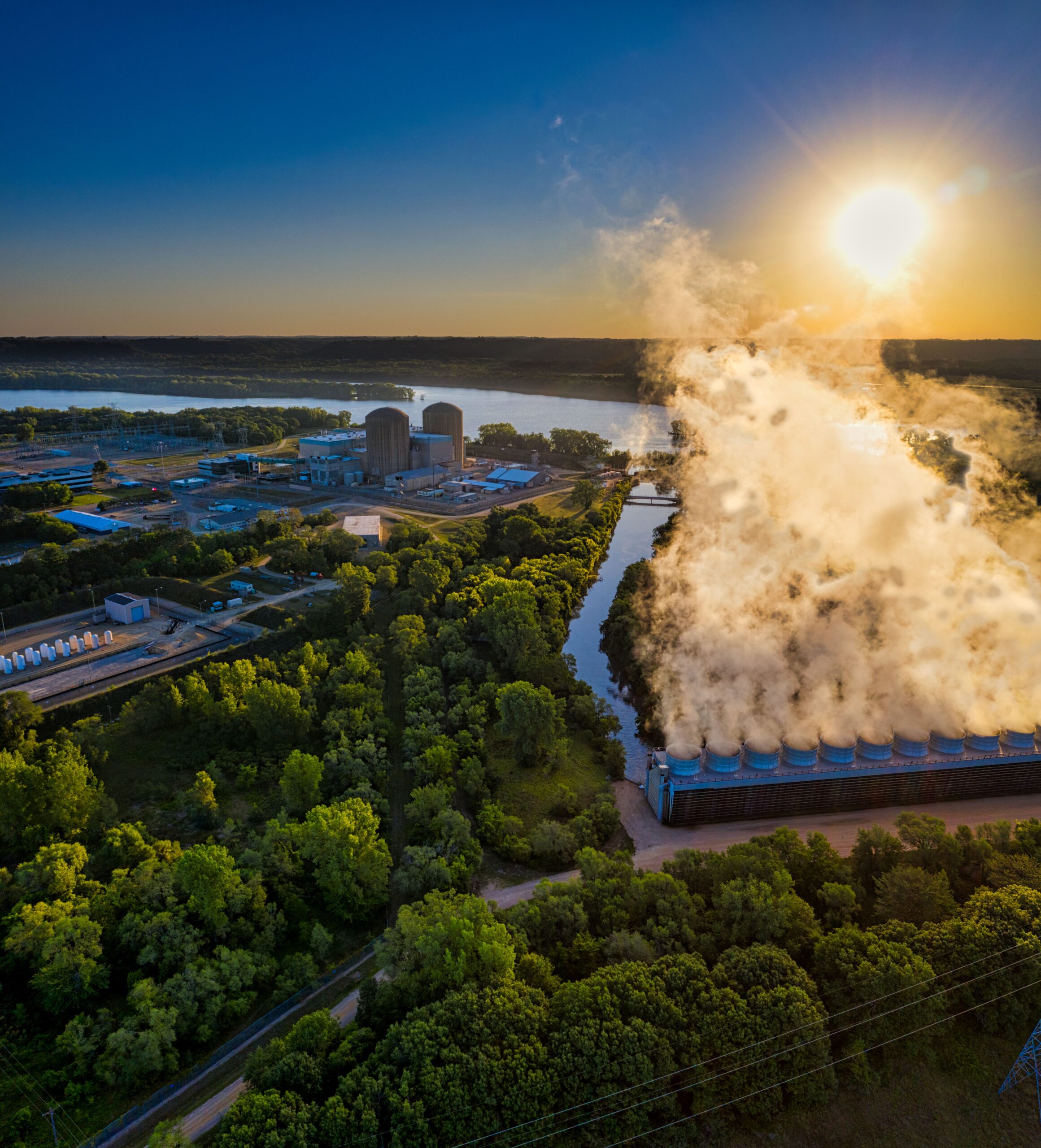
However, the drought affecting Europe’s major rivers revealed critical aspects of using water as a coolant in much-debated nuclear power plants. The most eloquent case is Paks, Hungary’s only plant, which supplies almost half of the country’s electricity demand. The flow of the Danube fell below the operational threshold and — an unusual figure — the water temperature reached 27.9 °C; in other words, too little water and not cold enough. Within a week, the plant reduced its output from 2,000 MW to 240 MW. It did not shut down completely, but it came to the brink of what would have been the first total shutdown in its 44-year history.
In France, the two reactors at the Chooz plant were shut down because of low Meuse flow and water temperatures above safety limits. Other plants on the Moselle and the Rhône had to reduce their output. In the case of the Rhône, water temperature was once again decisive: the authorised limit of 30 °C for returning coolant to the river was about to be exceeded. In Romania and the Czech Republic, plants reduced their output in some cases to 5% of their capacity.
Public opinion suddenly discovered that nuclear energy — one of the pillars of Europe’s electrical stability — depends critically on rivers that no longer guarantee the flow and temperature conditions required for cooling throughout the year.
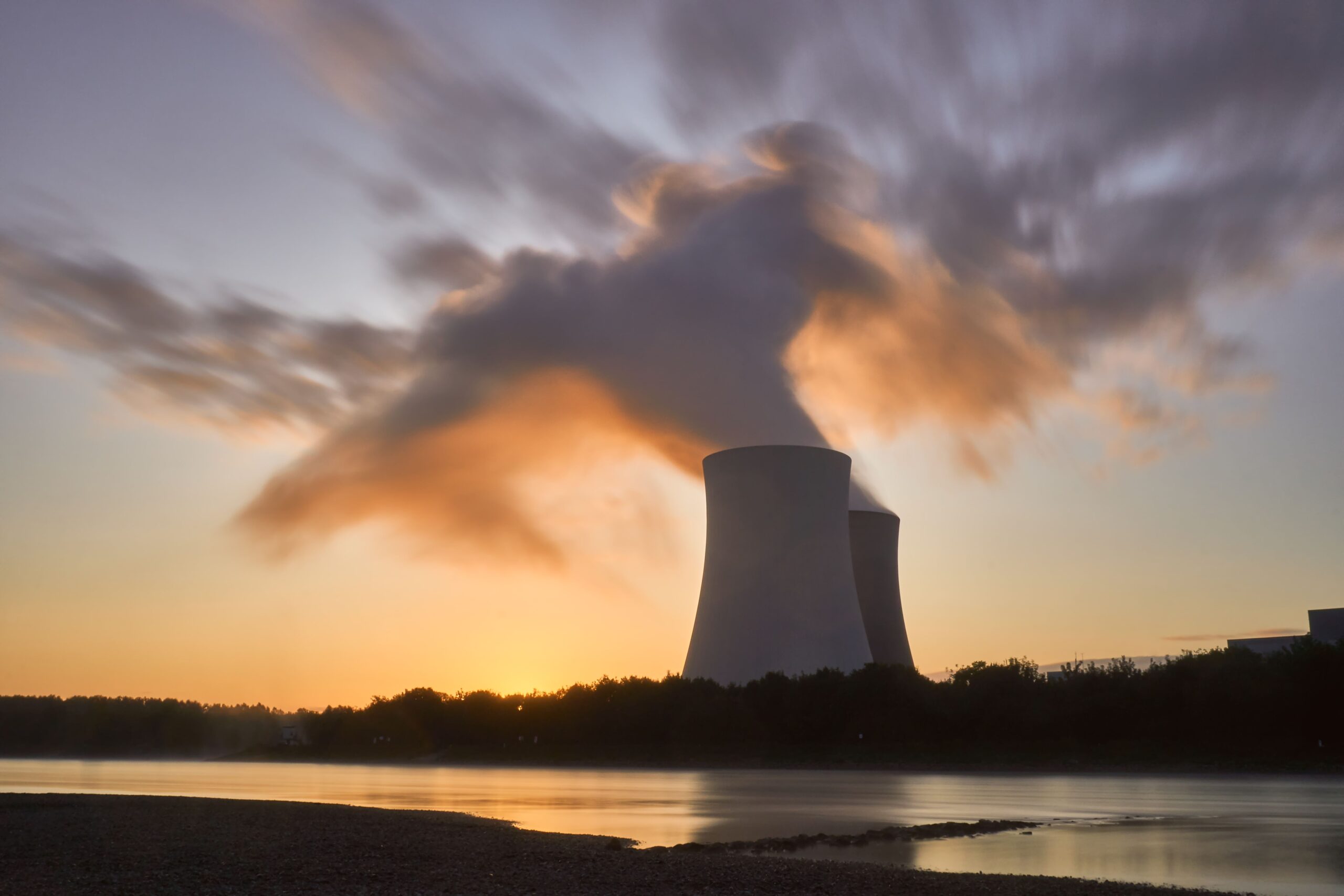
The drought affecting Europe’s major rivers revealed critical aspects of using water as a coolant in much-debated nuclear power plants. © pexels-distelapparath

Current AI-specialised chips consume three to five times more electricity than conventional processors, generating more heat and requiring more cooling systems. © colin00b-processor-pixabay
How much water does a prompt need?
While nuclear power plants faced restrictions due to a lack of cold water, a new factor added to the problem: generative AI multiplied cooling demand in data centres.
In December 2023, in the article A Cloud Hungry for Water, we wrote: “Tech companies need increasingly more water to cool their computers. In November 2022, a new factor burst onto the scene, shattering many forecasts: ChatGPT placed artificial intelligence (AI) within reach of any internet user. With chips that consume more than those in common servers, some experts, including those behind a Cornell University study, claim that global AI demand may require between 4.2 and 6.6 billion cubic metres of fresh water in 2027. This is an amount equivalent to half of the United Kingdom’s annual water consumption.”
Thirty months later, these forecasts have proved to be short — very short. AI has become an unexpected multiplier of cooling demand, and countless technical studies have emerged — such as Barnett‑Itzhaki, Water Research, 2026 — that outline a new scenario in the relationship between water and the industrial sector.
Current AI-specialised chips consume three to five times more electricity than conventional processors, generating more heat and requiring more cooling systems. This growing cooling demand has added a new variable to the water debate: every query, every calculation, every prompt has a water footprint. It is not rainwater — as in agriculture — but blue and grey water: the water used to cool data centres and the water used in the manufacture of the chips that make AI possible.
The most recent scientific studies converge on demand ranges depending on the type of cooling installed:
- 0.5 to 5 litres per prompt in centres with evaporative cooling (cooling towers that evaporate water).
- 0.1 to 0.3 litres per prompt in centres with optimised adiabatic cooling (hybrid systems that use air and a minimal amount of water).
The differences are therefore notable, and this is why it is important to clarify that we must speak in terms of “demand” rather than “consumption”, as is often communicated incorrectly.
Part of the water used for cooling evaporates and is lost; another part is reused. New data centres tend to operate with closed‑loop water systems or air cooling, so they do not return hot water to the environment. However, they do introduce a structural water demand associated with each digital interaction and with the electricity consumption itself coming from power plants — and those do return reheated water to the environment.
A new category of water consumption has arrived: digital water, invisible to the user but critical to the infrastructure.
A shift in public opinion. And in governance?
The coincidence of hydrological drought, the fragility of energy‑related cooling and the accelerated expansion of AI has triggered a profound shift in public opinion: European communities — and, more broadly, those of the industrialised world — have discovered that industrial cooling is a vulnerable link and that water is already a limiting factor for digital infrastructure.
The 2026 crisis revealed a structural vulnerability: energy and data depend on increasingly unstable rivers, and data centres have ceased to be solely digital actors to become water actors as well. This new scenario requires rethinking water governance, monitoring the factors that determine hydrological drought and designing systems in which energy, ecosystems and data centres do not compete for the same resource at critical moments. The European experience should show the industrialised and industrialising world how to guarantee sufficient water to sustain energy security, digital infrastructure, and ecosystems.