
Gender injustice has always been present in debates over water. This year, on the recent World Water Day, the United Nations recalled it with the slogan: “Where water flows, equality flows”. It is overwhelming evidence: women bear the brunt of the problems with access to water. They are, almost always, the ones who must walk long distances to obtain it when it is scarce, and also the ones who suffer most from the consequences of not having it or consuming it in poor condition: unhealthy sanitation, diseases, malnutrition and a chain of vulnerabilities that blocks any progress in the fight against poverty.
For those of us who have spent decades working in vulnerable communities, this statement is unquestionable: water is a prerequisite for the health, education, safety and development of women. However, we propose introducing an additional perspective into the debate: what if, in addition to recognising that water drives gender justice, we affirm that gender justice drives water?
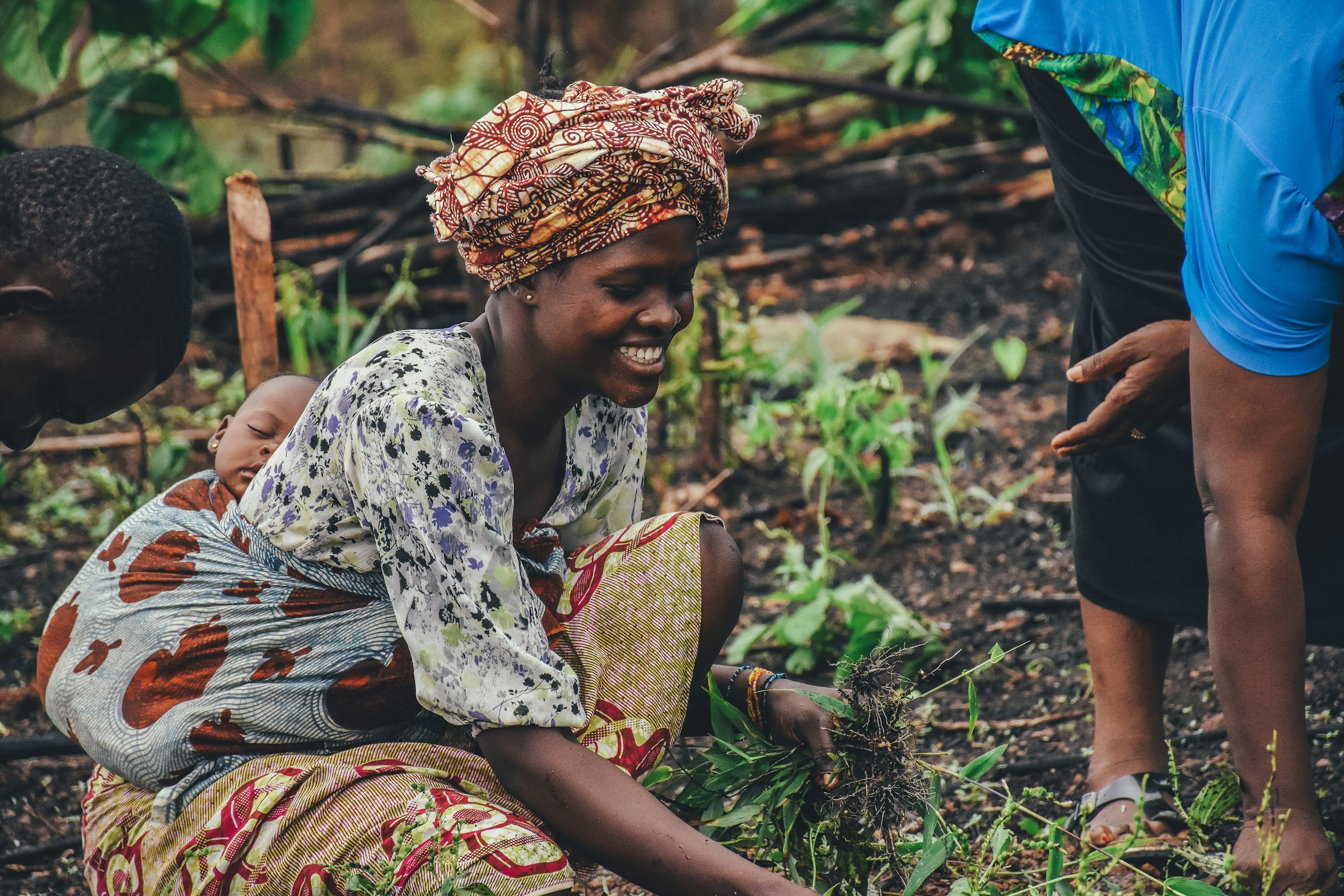
Stopping seeing women only as victims of the lack of access to water and starting to regard them as generators of solutions opens our eyes to a reality that has remained in the background. © annie-spratt /unplash
Our testimony of more than 15 years
It is a factor that, although it has international recognition, remains little disseminated. In all our projects, we have verified that sustainability depends on women’s active participation at every stage: from planning to daily management. And, above all, on their assuming a central role in the leadership of water committees, in the administration of infrastructures, in institutional relations and in the monitoring of supply. Our experience provides constant confirmation: wherever women lead, access to water improves and does not decline.
A significant example is our intervention in four villages in Rajasthan, one of India’s driest states. Three years later, 120 women keep the drinking water supply running for more than 780 families with exemplary efficiency. They were trained in the hub-and-spoke system, which we installed together with World Vision: water is extracted from the best available source using solar-powered pumps and distributed to community points. The women produced a detailed social map of the households, sources, drains, and flooded areas. No one knew better than they did the needs of each family or the risks of the territory. Today, they are in charge of the pumps, their maintenance, and even their repair, using specialised toolkits. They constitute the backbone of the project’s sustainability.
In very different rural contexts, such as African communities hit by drought and lack of infrastructure, the pattern is repeated: female leadership is the key to effectiveness and continuity. From our first interventions in Ethiopia to our most recent projects in Tanzania, success has depended on women’s participation in decision-making. We find the same evidence in Latin America, in agricultural communities in Nicaragua, Honduras and Chiapas, among many others, where we have worked.
Also, in emergency situations, their role is decisive. In the distribution of water purification tablets, in the organisation of new water sources, in the restoration of hygiene after a natural disaster… In all the catastrophes in which we have collaborated — Indonesia, Mozambique, Guatemala, Nepal and Turkey — women have been essential for psychological recovery and for the reconstruction of access to water. Their leadership is not optional: it is indispensable.
The social resources of women are evident. Their commitment to the common good stimulates cooperation, strengthens teamwork and generates greater social ownership of the agreements reached. Only in this way is the basis created for a community to grow with the equality and potential necessary to escape poverty and build resilience.
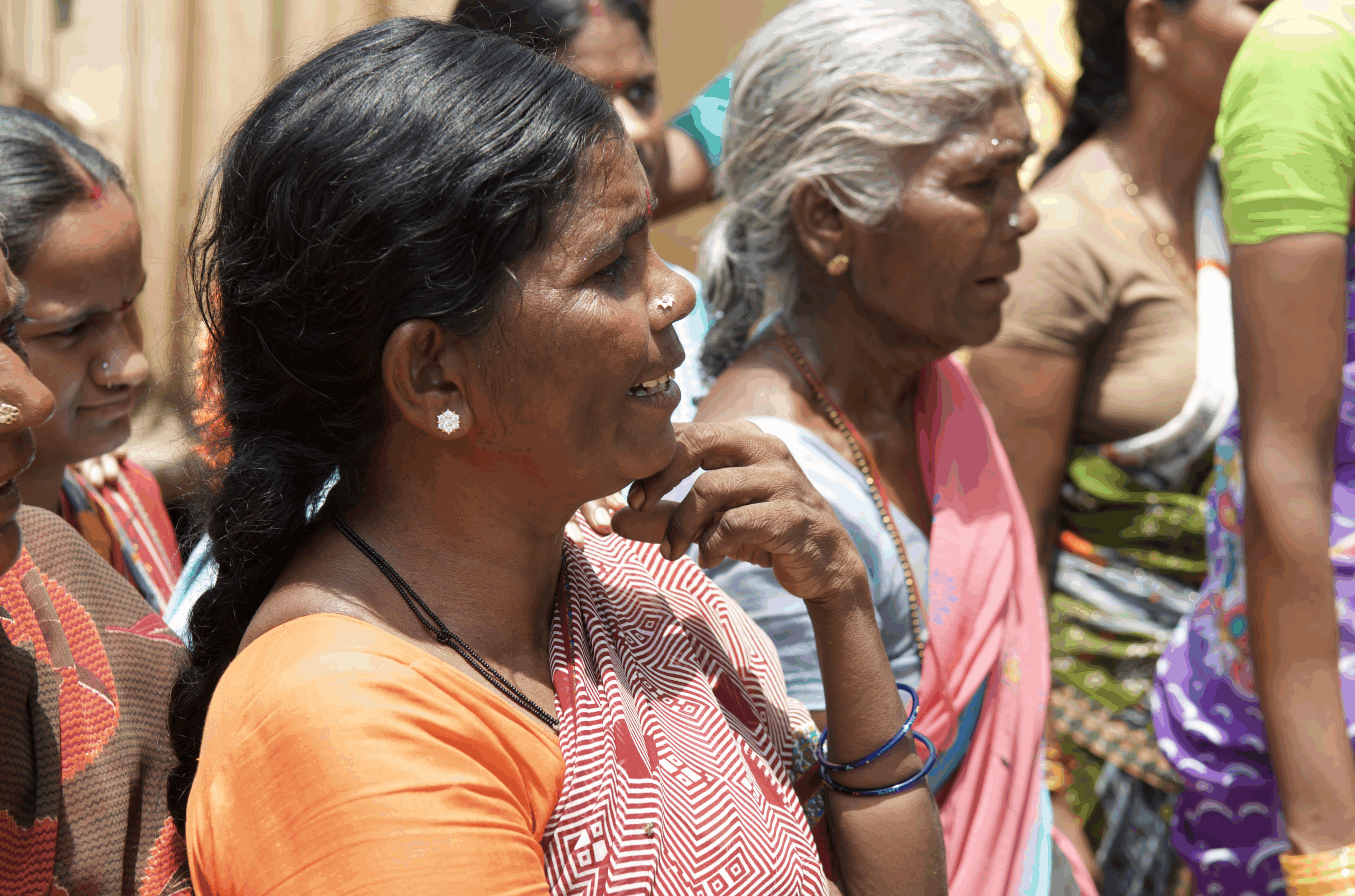
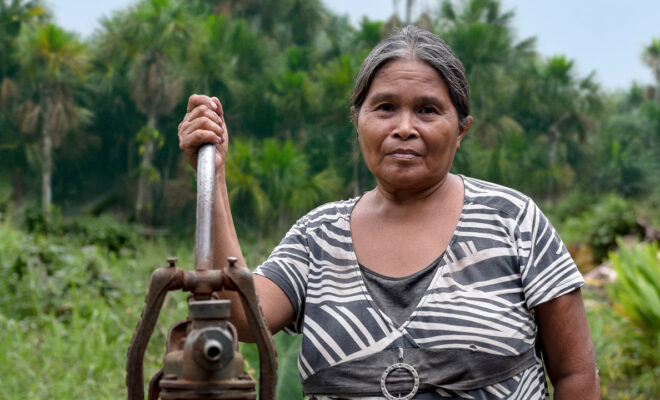
In all our projects, we have verified that sustainability depends on women’s active participation at every stage: from planning to daily management. © Carlos Garriga
Towards a change of global perspective
Turning female leadership into a structural element — not a one-off — is one of the great challenges of future resilience. Global data are compelling and clearly indicate the way forward. Women represent the largest agricultural workforce in developing countries and produce an essential part of the world’s food. The latest FAO report provides a decisive conclusion: the roots of rural poverty lie in the imbalance between what women do and what they have. If they had the same productive resources as men, agricultural production in developing countries could increase by 2.5% to 4%, reducing global hunger by 12% to 17%. Equality, therefore, is not only justice: it is efficiency.
This principle is also beginning to be transferred to water management. The road is long, but institutional mobilisation has already begun and the data are increasingly clear. Two recent studies demonstrate this with particular force. The report Women in Water Utilities: Breaking Barriers, produced by the World Bank, synthesises this conceptual shift better than any other. Its central conclusion goes beyond the rural sphere and enters fully into the economic sectors: water and sanitation utilities that incorporate more women in technical and leadership positions show better operational results, greater long-term sustainability and a greater capacity for climate adaptation. The lack of women is not only an injustice: it is a technical brake. As the report points out, gender justice is more than a social objective, it is an operational asset.
UNESCO also, in its United Nations World Water Development Report (WWDR 2024), underlines that the low representation of women in STEM disciplines — science, technology, engineering and mathematics — is one of the main bottlenecks to advancing innovation in the fight against water crises. The absence of women in regulatory bodies and governance spaces limits cognitive diversity and reduces the capacity for anticipation. The report is clear: gender equality is a structural component of water security, not a complement.
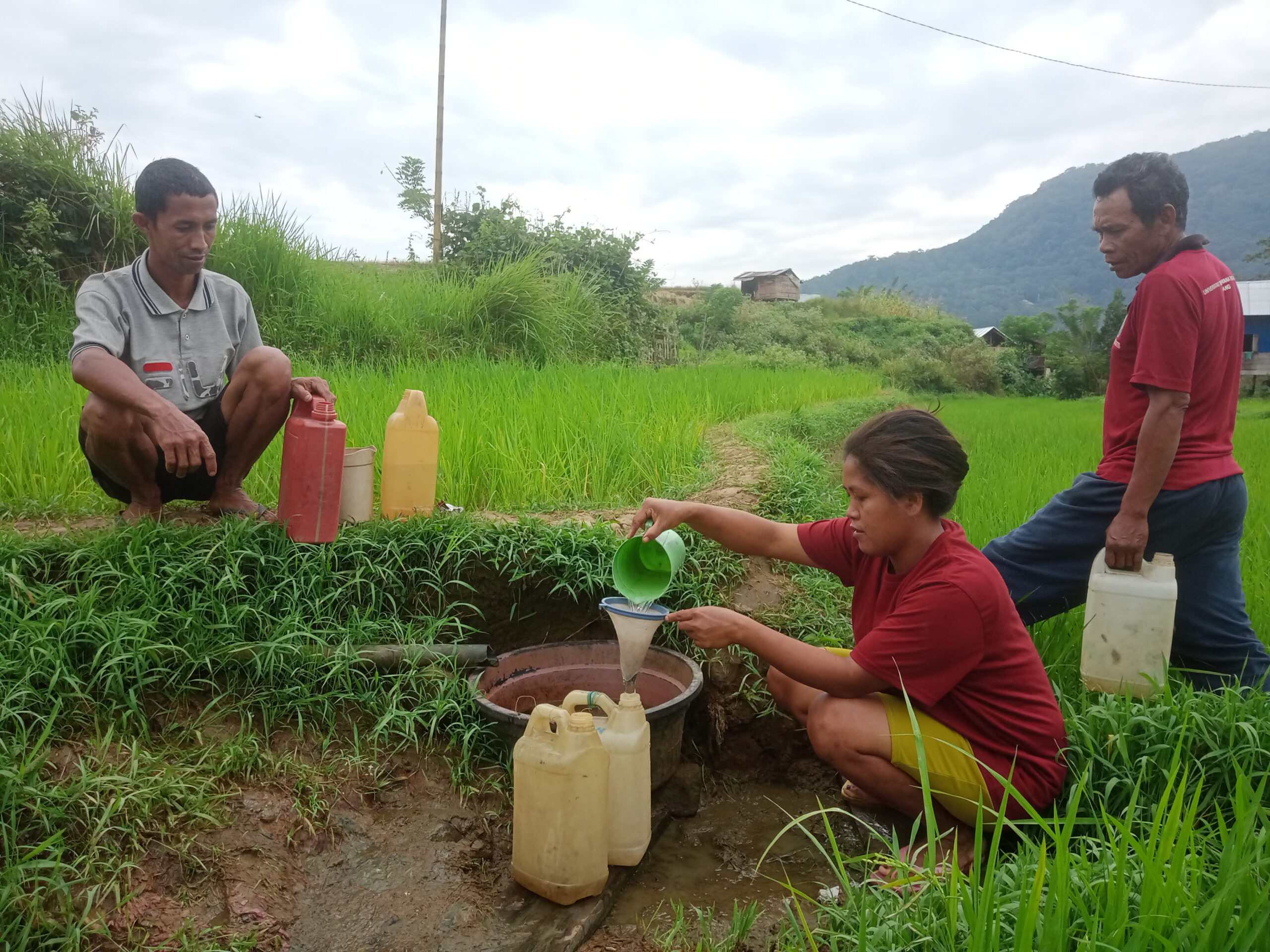
Los recursos sociales de las mujeres son evidentes. Su compromiso con el bien común estimula la cooperación, fortalece el trabajo en equipo y genera una mayor apropiación social de los acuerdos.© World Vision
When equality grows, water finds its way
The slogan of this year’s World Water Day reminded us that water drives equality. But experience and evidence also show the other side of the equation: equality drives water. If we want water to flow, we need equality to grow. The world of water teaches us that, to build strong, resilient communities, it is essential for women to occupy the places that are theirs in decision-making. Wherever they lead, water advances, infrastructure is sustained, and the community gains capacity for the future.