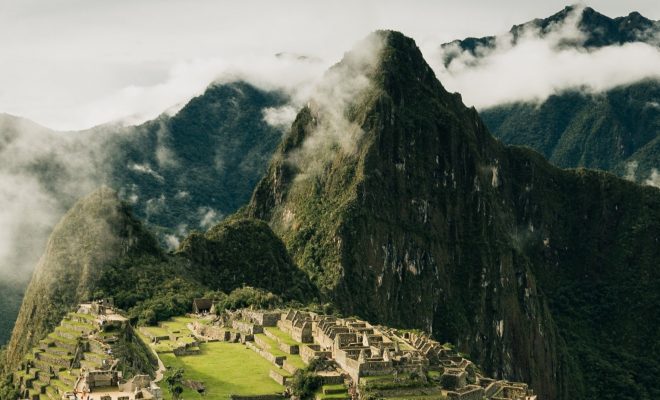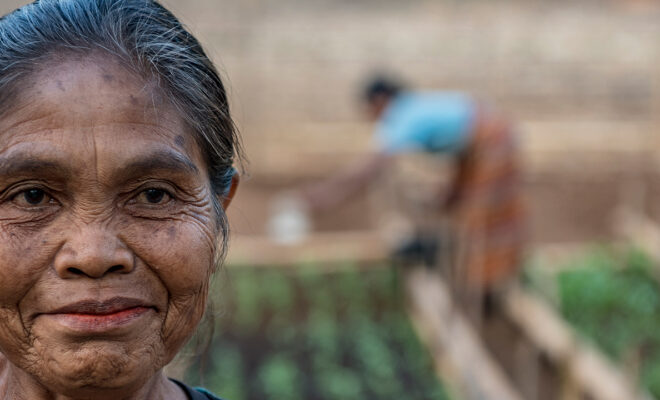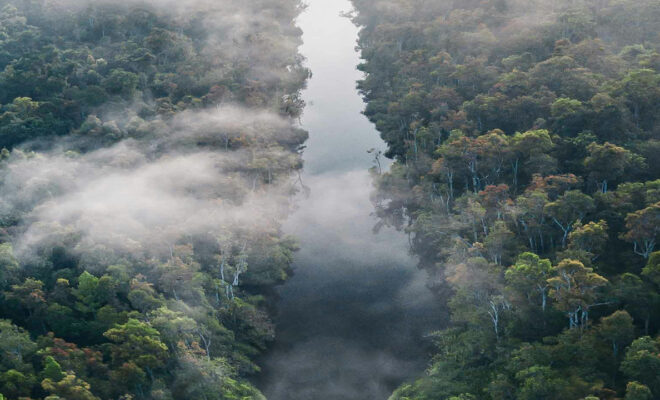


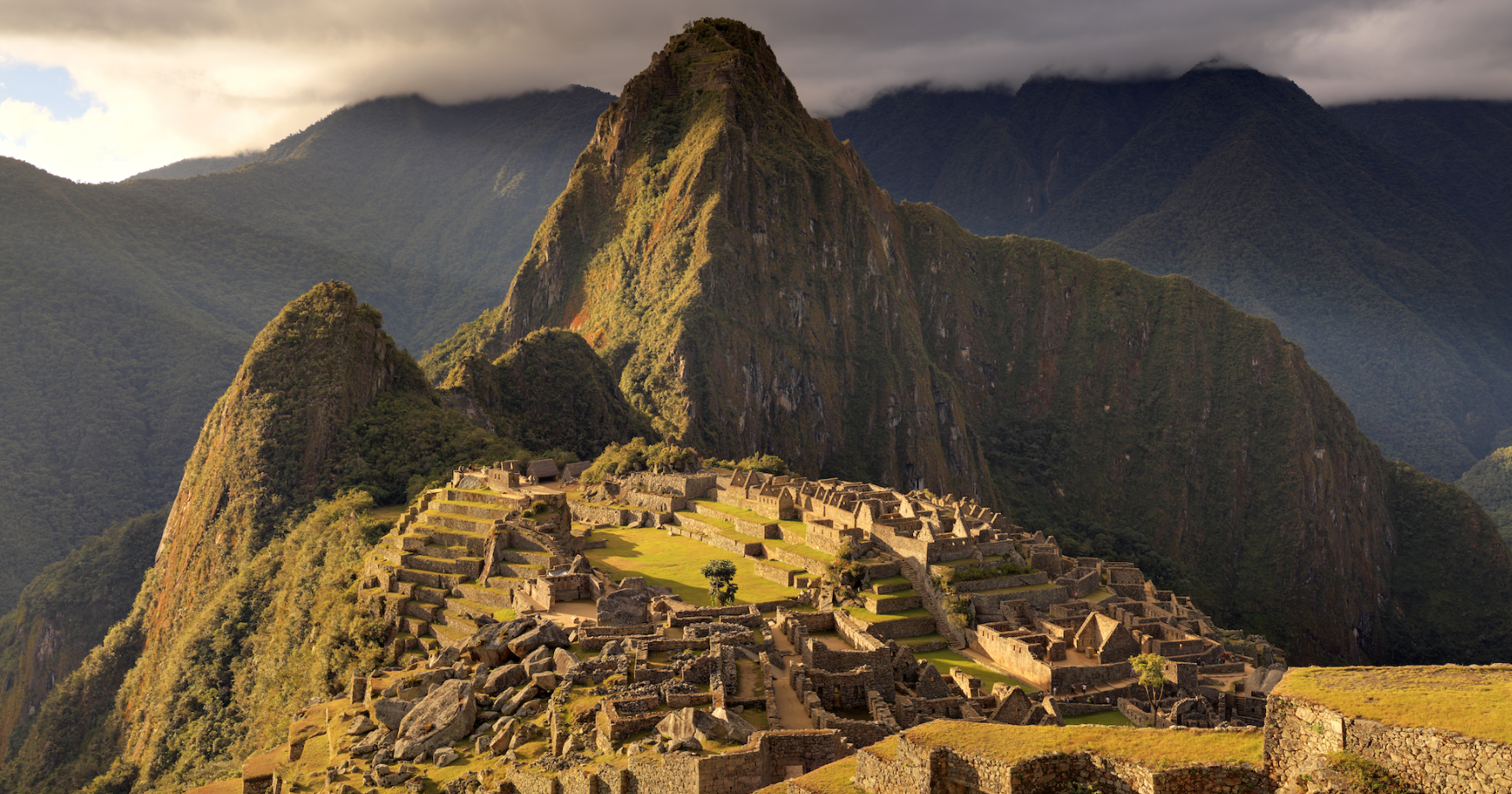
Mountain cultures developed systems capable of retaining water, cultivating on extreme slopes and sustaining biodiversity. © Martin St-Amant
“Our ancestors did not ‘manage resources’; they ‘nurtured’ water, soil, and crops, and embraced the common good in all their works. They had a strength that we no longer have: a cosmovision, a way of seeing life that was reflected in respect for nature, water and soil.”
With this reflection, Ronald Ancajima sums up an idea that runs through all the great mountain ranges of the planet: the mountains are home to cultures that learned to live with the fragility of water and the harshness of the territory. Ancajima is one of the most renowned specialists in Water Resources Planning and Management, with whom we spoke in a Liquid Talks about the enormous Andean water challenge. The Peruvian academic has spent decades recovering Inca hydraulics, an ancestral culture based on a principle that transcends borders: from the terraces of Ifugao in the Philippines to the Japanese tanadas, passing through the Mediterranean terraces or the Andean andenes, mountain peoples have constituted schools of agriculture and water management for millennia.
In the great mountain ranges of the planet, life still depends on ancestral engineering capable of cultivating on impossible slopes. Between 900 and 1,100 million people live there who still depend on agriculture and livestock to sustain their daily lives.
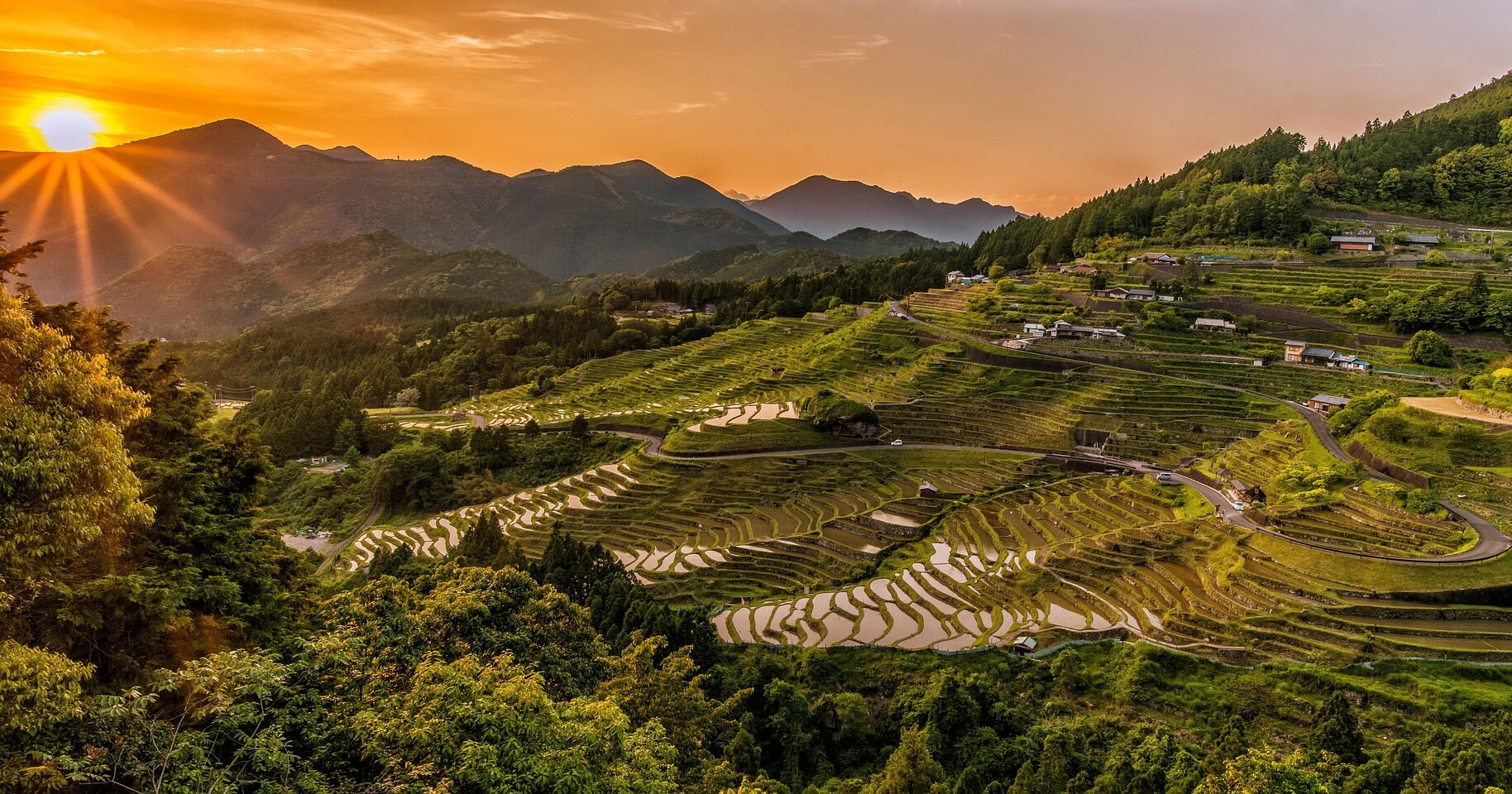
The Peruvian academic has spent decades recovering Inca hydraulics, an ancestral culture based on a principle that transcends borders: from the terraces of Ifugao in the Philippines to the Japanese tanadas (pictured). These structures allow for cultivation on steep slopes that would otherwise be impossible to farm. © Kanenori /pixabay
Innovation That Comes from the Past
The renewed interest in mountain slopes is part of a global movement seeking to recover ancestral agricultural techniques capable of regenerating soils, retaining water, and sustaining biodiversity. At the Foundation, we have learned, project after project, that it is not a matter of inventing new solutions: the solutions already exist; what is urgent is to rescue their logic, adapt them and demonstrate their viability.
In 2010, we developed one of our first projects in the Bosawas Reserve (Nicaragua), where we worked with Mayangna communities threatened by soil degradation. There, we promoted practices that would restore the natural water cycle, supporting two disciplines that, over the past 15 years, have demonstrated their effectiveness: agroforestry and silvopasture.
A year later, FAO launched the GIAHS programme (Globally Important Agricultural Heritage Systems), a turning point in the way the recovery of traditional agricultural systems is approached. This international recognition reinforced the path we have followed in subsequent projects: from supporting the Aymara and Uru communities of Lake Titicaca (Peru and Bolivia) to the more recent work with Indigenous peoples of Chiapas (Mexico).
Ancestral agricultural techniques have been gaining prominence at climate COPs, and especially at those focused on biodiversity: at COP 16 in Cali, Carlos Garriga, the Foundation’s director, stressed that “We need a nature‑based economy, a regenerative economy that truly helps the communities that need it most, especially Indigenous communities, who are, in many cases, those caring for and preserving biodiversity.”
The Importance of Slopes
The GIAHS programme has shown that traditional agricultural infrastructure functions as natural infrastructure: it regulates the water cycle, slows erosion, creates microclimates, and sustains an enormous diversity of crops.
In Asia, for example, the Banaue rice terraces have operated for more than 2,000 years as an integrated system of water, soil, and forests. In eastern Africa, the terraced fields of Konso enable communities to withstand increasingly severe droughts. In Europe, the terraces of the Mediterranean basin have been decisive in slowing desertification. In all cases, FAO highlights a common pattern: when these infrastructures are abandoned, erosion, the loss of fertile soils and water insecurity increase. The disaster of the Mar Menor is a nearby example: the disappearance of the old dryland terraces and terraced cultivation —which helped retain water and soften the force of flash floods— was one of the factors that aggravated the ecosystem’s degradation.
World Bank reports on mountain agriculture indicate that the restoration of terraces and traditional water‑management systems can increase productivity by 20% to 60%, reduce climate vulnerability, and strengthen rural economies. On a planet where 50% of the population depends directly or indirectly on mountain ecosystems for water, these systems are sources of life.
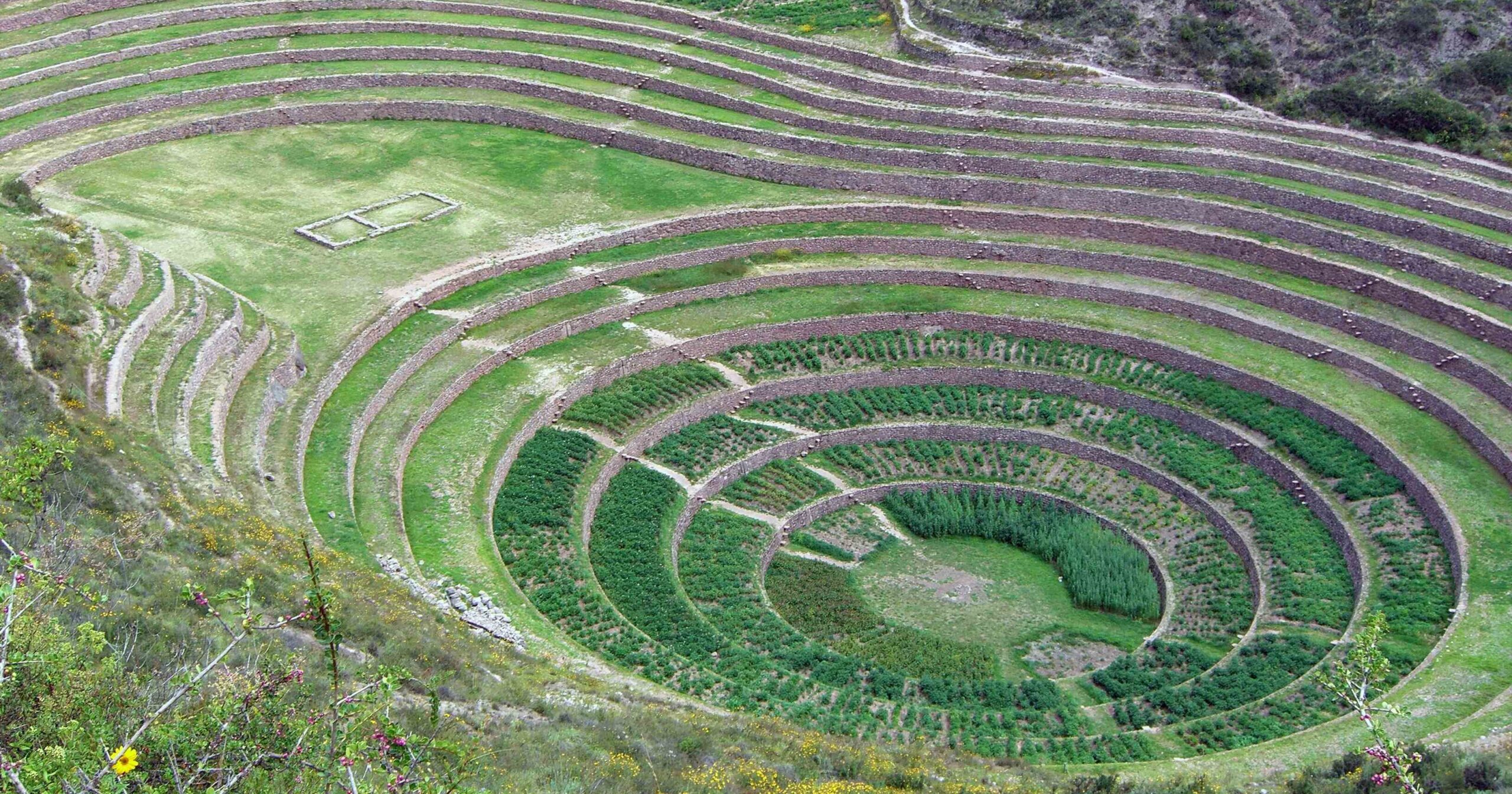
No other civilisation developed an agricultural engineering system as extensive and sophisticated as that of the Tahuantinsuyo, the Andean empire of the Incas. The photo shows concentric circular terraces from the Inca culture, which likely served as experimental centers for adapting crops to different microclimates. © Philipp Weigell
The Andes: the mountain range that perfected vertical agriculture
In this global map of ancestral knowledge, the Andes occupy an exceptional place. No other civilisation developed an agricultural engineering system as extensive and sophisticated as that of the Tahuantinsuyo, the Andean empire of the Incas. According to Holdridge’s ecological classification, the planet has 117 life zones, and Peru contains 84 of them, an extraordinary diversity that explains the agricultural richness of the Andean world: an ecological mosaic that the Incas transformed into a vertical productive system, structured in andenes (terraces) capable of sustaining a population counted in millions.
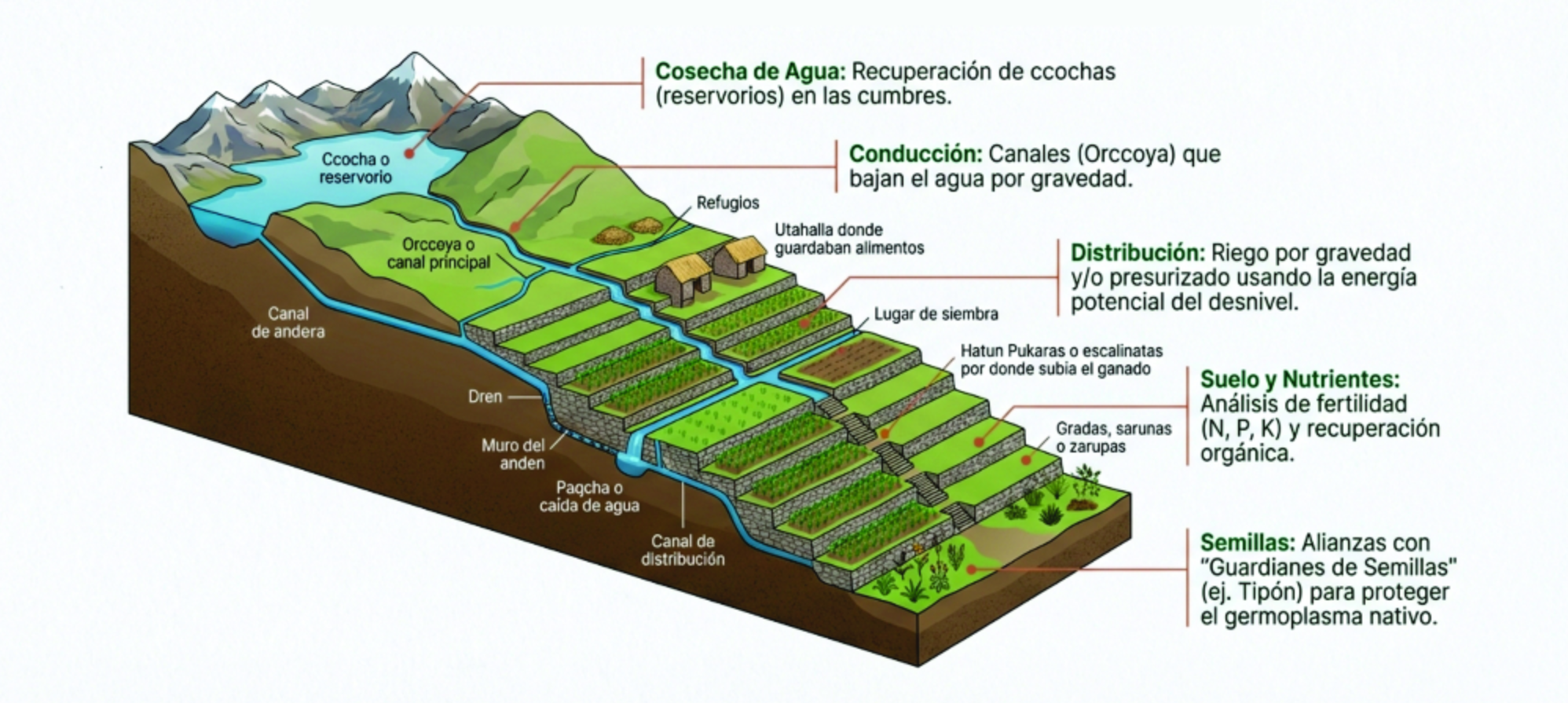
Ronald Ancajima insists that the andenes were not simple terraces: they constituted an integral hydraulic system. They captured rainwater on the summits, infiltrated it into cochas, distributed it by gravity through canals and applied it in terraces that stabilised soils, created microclimates and allowed cultivation ranging from tubers to fruit trees. Today, more than 340,000 hectares of these andenes are inventoried.
However, the Andean paradox persists: the heirs of this engineering live today in conditions of poverty and state marginalisation. Family farming—which supplies between 60% and 70% of the country’s fresh food—operates with scarce water infrastructure, limited mechanisation, and little access to markets. Most of the andenes are located between 3,000 and 4,000 metres above sea level, precisely where social vulnerability indices are highest.
A Dormant Potential
The inter‑Andean valleys, from Apurímac to Cusco and Ayacucho, concentrate extraordinary agricultural and cultural wealth. They are territories where fertile soils, high‑quality water, native biodiversity and an agricultural memory that has resisted centuries of abandonment coexist. Five years ago, we highlighted that they were “valleys for the world”. Today, that statement takes on a new meaning: on a planet seeking nature‑based solutions, the Peruvian Andes harbour one of the most advanced water technologies ever developed.
FAO has noted that Andean grains — quinoa, kiwicha, cañihua, tarwi — have exceptional nutritional and commercial potential. The World Bank insists that improving water infrastructure and connectivity in the highlands is one of the investments with the greatest social return.
In this global and Andean context, Ronald Ancajima proposes in the more than 1,100 hectares of andenes of Caraybamba (Apurímac) a model that combines terrace restoration, water strengthening, light mechanisation and experiential tourism.
The project (see figure 1) integrates water harvesting, the rehabilitation of traditional canals (orccoyas), adapted mechanisation with power tillers inspired by Japanese terraces, and the safeguarding of the germplasm of native seeds. Its value proposition has a socio‑economic vision: to encourage sustainable experiential tourism by enhancing the productive landscape and to coordinate community governance with yachachiqs —rural leaders who combine ancestral knowledge and technical training— who are key to ensuring that innovation takes root in the community and is sustained over time.
[Photo caption]:
Figure 1. Structure of the terrace system inspired by Inca agriculture and hydraulics. It is based on water strengthening, gravity irrigation, organic recovery and the protection of ancestral agricultural genetic heritage. © Ronald Ancajima
Ancestral Wisdom as Technology for the Future
Caraybamba is not an isolated project: it is a model that can be replicated across the Peruvian highlands, with clear global projection in a world seeking nature‑based solutions. Faced with simultaneous crises — climatic, water‑related, food‑related and concerning biodiversity — the mountains remind us that many answers already existed in the cultures that learned to live in balance with their territory.
Recovering these practices is a strategy for water security, food sovereignty and biodiversity conservation. It is also an act of justice towards the communities that have sustained these landscapes for centuries and that today offer essential clues for confronting the global crisis.