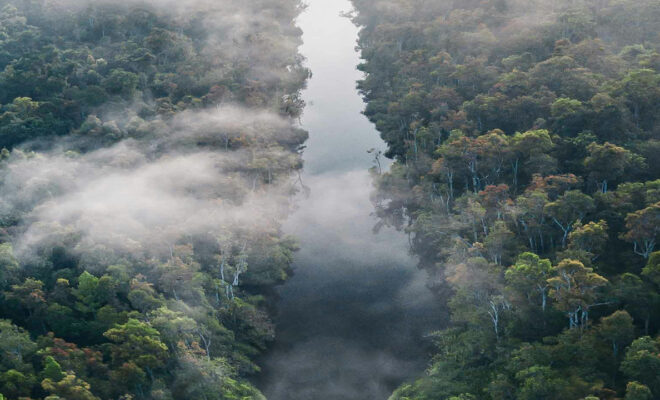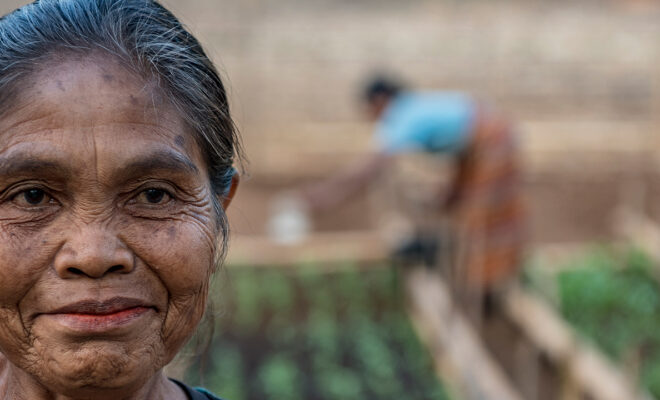

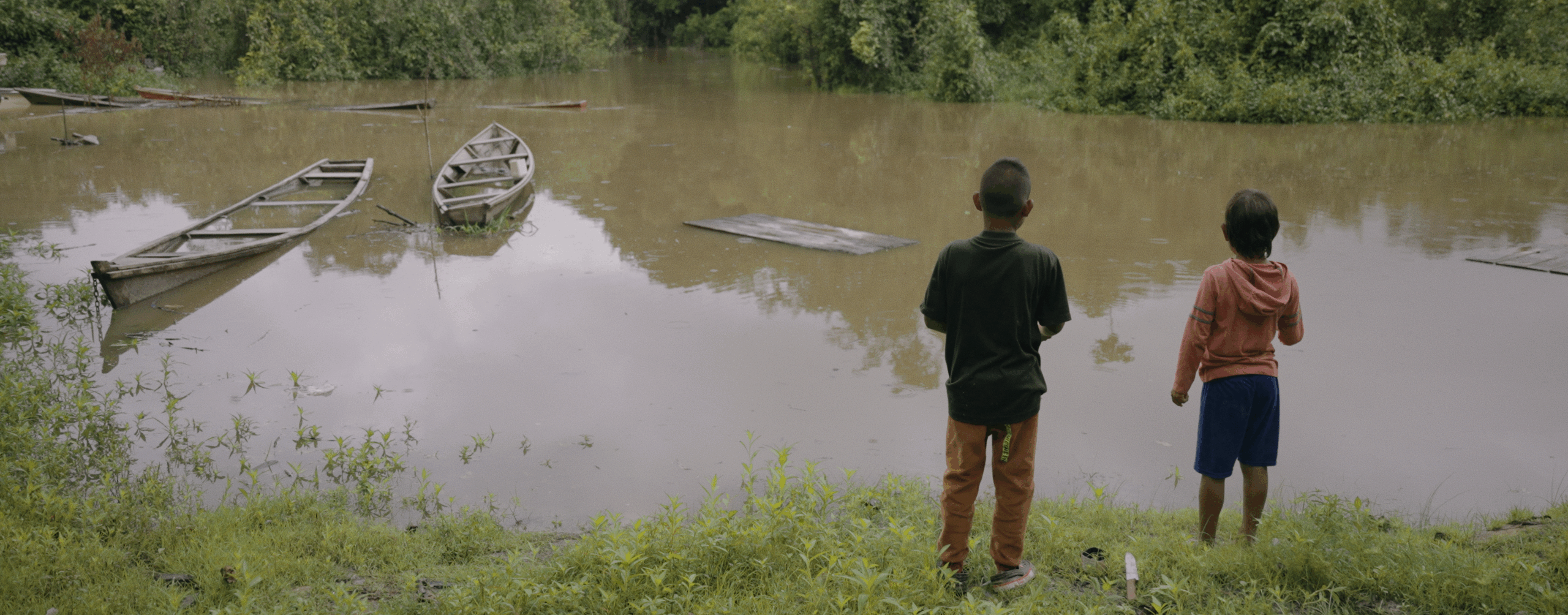
The future of the Ticuna depends on educating young people in the values of a culture grounded in honesty, hard work and harmony with nature. © We Are Water Foundation
The river has a voice”, say the Ticuna elders, and in that affirmation beats the way of understanding the world of a culture that has grown up listening to the language of water. For them, the river not only sustains life: it explains it.
The Ticuna are one of the most numerous peoples of the Amazon. They call themselves Magüta, “the people of the origin of the world”, or Pogüta, “those who were fished with a rod”, in reference to the myth of Yo’i, the cultural hero who gave them life. They live on the banks of the upper Amazon, in a wide region that extends across Colombia, Peru and Brazil.
The voice of the river has guided the Ticuna generation after generation, forging ancestral knowledge that goes back long before the seventeenth century, when the Portuguese documented their existence to the world for the first time. Their culture has been transmitted orally: the elders keep the origin myths, the signs of the climate, the cycles of fishing and hunting, and the art of “making the chagra”, the cultivation plot that is at once food, school and memory of the territory.
But that voice which guided their ancestors in fishing, hunting and cultivation is no longer the same: it is uncertain and confused. The river’s flow is altered, and its waters run polluted. On its banks, deforestation advances and with it the loss of biodiversity that is the basis of their sustenance. Their children can no longer enjoy the health that the water gave their grandparents, and the whole community struggles to recover its life beside the water.
Together with World Vision, we have produced a documentary that delves into the present reality of these people, who are living difficult times in their intimate relationship with the river and striving to recover their ancestral culture and pass it on to their children and to the world.
Directed by Ignasi Rodríguez and Carlos Garriga, director of the Foundation, Amazonas: The Memory of Water focuses on people. Beyond the spectacular landscapes, it portrays the daily life of the riverside communities and their intimate relationship with water.
The enormous generational contrast
The main narrator is Jorge Cayetano Santos, Aru Atüku (“Rattlesnake Leaf”, in the Ticuna language). “Our grandparents are those living libraries who are sharing with us what they have lived, what they have felt…”, he says as he travels along the river in his canoe.
They are the canoes that the Ticuna have adapted to the river, to fishing, and to transport. The same canoe from which Isidoro explains how much the fishing has dwindled, how polluted the waters are, and how the decreasing flow has made islands and beaches appear that did not exist when he was young. “It seems as if in 20 years we are all going to end up trapped”, he says, looking at a landscape that is changing far too quickly.
An unstable flow
The flow of the Amazon no longer follows the rhythms known by the Ticuna grandparents. Climate change has disrupted the river’s stability: droughts are deeper and create unusual islands and beaches, while increasingly violent floods inundate the riverbanks as never before. A recent study confirms that the Amazon is experiencing historic droughts (2023 was the worst on record), while extreme flooding has increased by 26% since 1980. The basin is entering a regime of extreme oscillations: record-low water levels and record-high floods.
In the villages and small riverside towns, problems multiply. In Leticia, as we see in the documentary, few people now feel safe in their homes during the rainy season: many families have had to raise walls and elevate the level of their floors to prevent the water from entering. In the dry season, the lack of sanitation turns drains into open sewers.
Dependence on water trucks for drinking water is total, and it is the main factor preventing diarrhoea — already endemic, especially among children — from becoming an even greater emergency.
In a riverine society, the river is the main route of connection. The Ticuna travel in their canoes not only to fish, but to transport their harvests, do their shopping and take their children to school. Many times, during the dry season, this is no longer possible: some stretches of the river are not navigable, a circumstance also reported by Indigenous peoples of the middle Amazon, in Brazil, who call the river Solimões, a Portuguese deformation of the name of an ancient Indigenous people of the territory, the Soriman, now disappeared.
The seasons blur, and organising daily life becomes increasingly difficult. The communities no longer have fixed work calendars and have to improvise more and more often.
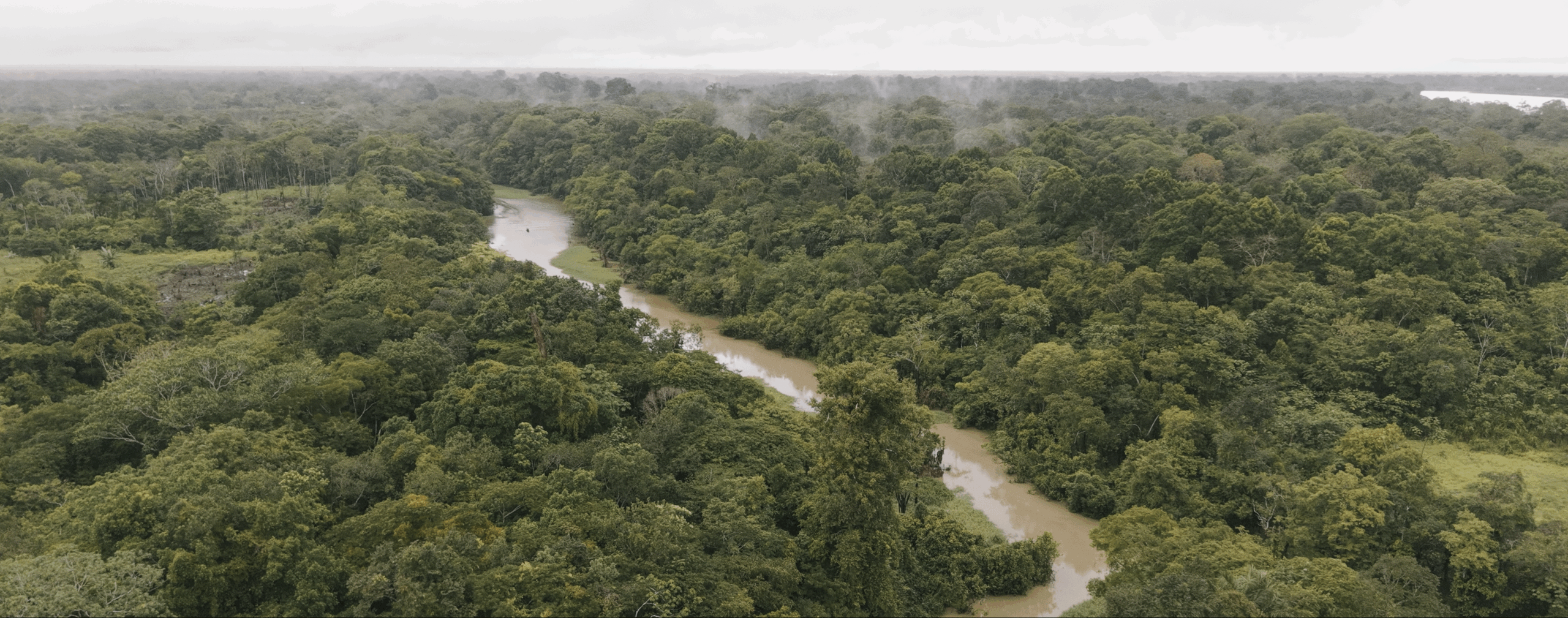
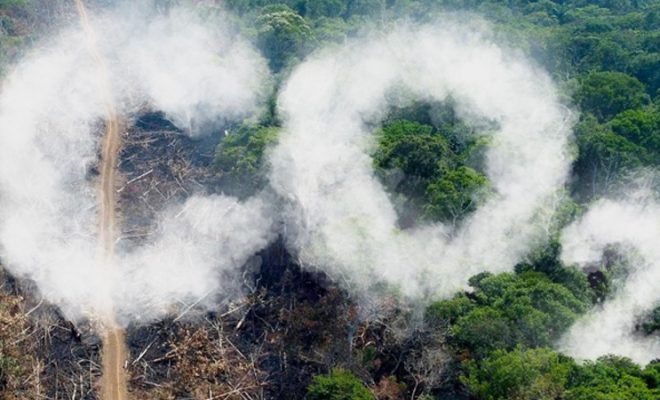
Because of climate change, the Amazon basin is experiencing increasingly intense droughts and extreme floods. © We Are Water Foundation
The streams, the axis of life
Although the Ticuna may have access to supplied drinking water, their lives revolve around the quebradas, the small streams that proliferate throughout the territory. There they wash their clothes, bathe, and where the children play. The women collect this water and, after boiling it, use it for cooking. They are part of the more than 106 million people who, according to the JMP, depend on surface waters for their daily water supply.
In the past, the regularity of the rains made it possible to know when the water was clear and safe. Today, that certainty has been lost. To climate disruption are added human pressures that disrupt the forest’s balance: massive deforestation alters the hydrological cycle; illegal mining contaminates flows and aquifers with mercury; and urban expansion without adequate sanitation turns every quebrada into a health risk.
The paradox is evident: according to the World Bank, the Amazon is the largest reserve of fresh water on the planet, yet only one in three Indigenous communities has safe access to water. It is one of the examples of what NGOs and UN rapporteurs often refer to as “structural water injustice”: a persistent inequality in access to water that does not stem from isolated failures, but from systemic political, economic, territorial or environmental factors that reproduce themselves over time and disproportionately affect certain peoples or communities.
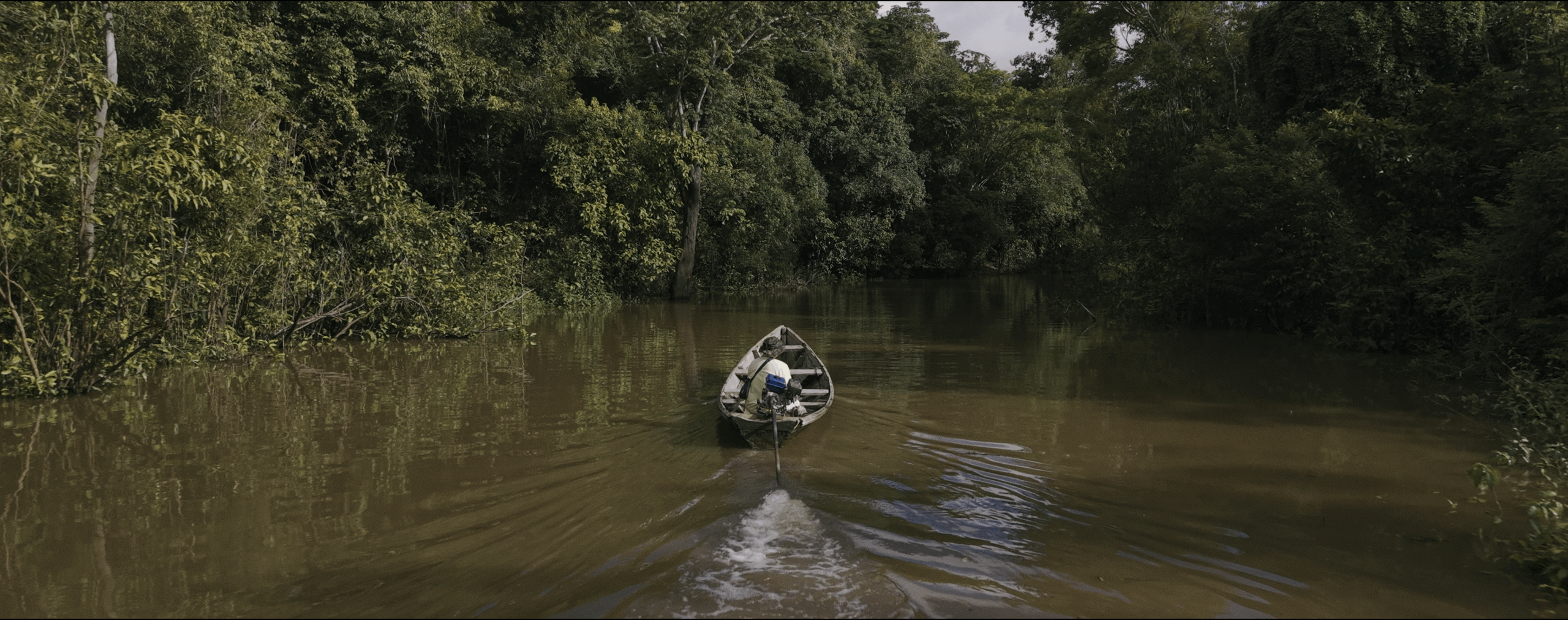
Deep knowledge of nature is the foundation of Ticuna culture, whose legacy must not disappear © We Are Water Foundation
An exceptional culture that must guide us
Teófilo Pandoro, a teacher at the Antonio Ricante school, carries out crucial work: educating young people in the values of a culture based on honesty, hard work and integration with nature. He is the hope for the future of the Amazon: “May the children be prosperous, may they be professionals capable of leading a programme, a village, a community, an extensive society… capable of dealing with diverse community issues and connecting them at a national level.”
In this sense, the recent COP30 changed the global climate narrative: Indigenous peoples have become rightful and necessary protagonists. Their claim, so often ignored, resonated strongly in the debates in Belém, where more than 900 Indigenous representatives were accredited. There, we presented direct testimony about the consequences of climate change and human activity among the Ticuna, as shown in the documentary.
From their culture — as from that of all peoples who live in direct contact with nature — emanates a key message we must understand: rivers are not political borders nor lines on a divided map; their water forms a continuous territory where human life and biodiversity make up a single fabric. The message of Indigenous peoples is clarifying and obliges us. Caring for water is caring for life, that of our planet, that of everyone.